




Online lottery play in India is legal only when the ticket or platform is authorized by a state government that permits lotteries. Private online lotteries and most foreign lottery websites are not authorized under Indian law and carry real legal and financial risk.
Three facts you need to know right now:
- Statutory basis: The Lotteries (Regulation) Act, 1998 reserves lottery organization exclusively for state governments. No private entity or foreign operator can legally run a lottery for Indian residents.
- State-by-state rule: A ticket that is perfectly legal in Kerala or Sikkim can be illegal to buy or sell in Delhi or Gujarat. Territorial limits are strict, and buying across state lines where local law prohibits it exposes you to penalties.
- Payment and remittance limits: FEMA and RBI guidelines can block or freeze payments to foreign lottery platforms. The Promotion and Regulation of Online Gaming (PROG) Act, 2025 adds another layer of central scrutiny that affects offshore operators accessible from India.
Your immediate next step: visit your state government’s lottery department portal or finance ministry page before purchasing any ticket.
Table of Contents
- Which Indian states allow, restrict, or ban lotteries?
- What laws and court rulings actually govern lottery legality in India?
- How do state-run lotteries, online sales, and lucky draws differ legally?
- Are international online lottery sites legal, and what risks do they create?
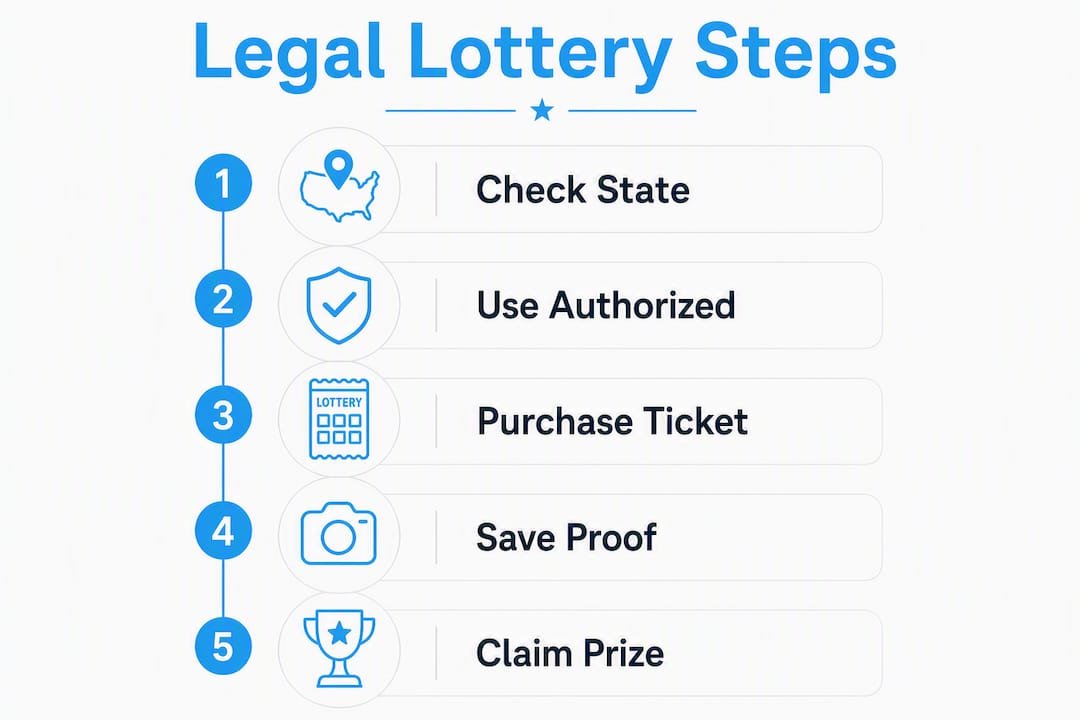
- How to play the lottery legally in India: a step-by-step checklist
- How are lottery winnings taxed in India?
- What can you do if a winning claim is denied or payment is withheld?
- How to spot a legitimate lottery and avoid scams
- Key Takeaways
- The only bet worth making is a legal one
- Authoritative sources and further reading
Which Indian states allow, restrict, or ban lotteries?
Several state governments historically permit state-run lotteries in India. The rest either ban lotteries outright or have no enabling legislation. That split matters enormously when you are deciding where and how to buy a ticket.
| State / Territory | Lottery Status | Online Sales Permitted? |
|---|---|---|
| Kerala | Permitted (state-run) | Restricted (paper-primary) |
| Sikkim | Permitted (state-run) | Limited online authorized |
| Nagaland | Permitted (state-run) | Paper and some online |
| Punjab | Permitted (state-run) | Paper-primary |
| Goa | Permitted (state-run) | Paper-primary |
| Maharashtra | Permitted (state-run) | Paper-primary |
| West Bengal | Permitted (state-run) | Paper-primary |
| Mizoram | Permitted (state-run) | Paper-primary |
| Meghalaya | Permitted (state-run) | Paper-primary |
| Arunachal Pradesh | Permitted (state-run) | Paper-primary |
| Manipur | Permitted (state-run) | Paper-primary |
| Delhi | Banned | No |
| Gujarat | Banned | No |
| Uttar Pradesh | Banned | No |
| Rajasthan | Banned | No |
| Tamil Nadu | Banned | No |
| Karnataka | Banned | No |
| Andhra Pradesh | Banned | No |
Statistic to know: Only some of India’s 28 states and 8 union territories operate state-run lotteries. That means residents of the majority of Indian states have no lawful domestic lottery option at all.
One critical nuance: even states that permit lotteries do not automatically permit online ticket sales. Kerala, for example, runs one of India’s most recognized state lottery programs but has restricted online retail sales of its tickets. Buying from an online reseller in a state that bans online sales can be unlawful even if the underlying lottery is state-authorized.
How to verify your state’s current status:
- Search “[Your State] Lottery Department” on the official state government domain (look for
.gov.inornic.inaddresses). - Check the state finance or home ministry portal for the latest notifications.
- Call the state lottery department helpline directly if the website is ambiguous.
State lottery rules change through government notifications, so a status that was accurate last year may not reflect today’s position. Always cross-check before buying.
What laws and court rulings actually govern lottery legality in India?
The legal framework is layered: one central act, one set of central rules, one older colonial-era law, and a patchwork of state-level acts and notifications. Understanding how they interact tells you exactly why state authorization is the only safe path.
Core statutes:
- Lotteries (Regulation) Act, 1998: The primary central law. It restricts lottery organization to state governments and sets conditions for how state lotteries must be run, including draw frequency, prize structures, and agent authorization.
- Lotteries (Regulation) Rules, 2010: Extended the regulatory framework to cover “online lottery” and defined a “central computer server” for draw purposes. This is the rule that formally brought digital lottery formats under the same state-authorization requirement.
- Public Gambling Act, 1867: The older colonial statute that criminalizes running or visiting a “common gaming house.” Courts have used it to distinguish games of skill from games of chance, and lotteries fall squarely in the chance category.
- State lottery acts and notifications: States like Kerala, Sikkim, and Nagaland have their own enabling legislation that authorizes their specific lottery schemes. These state laws operate within the framework the 1998 Act creates.
- PROG Act, 2025: The Promotion and Regulation of Online Gaming Act creates central-level controls and stricter enforcement for online money gaming services, with penalties and potential registration requirements. While it primarily targets skill-based online gaming, its centralizing trend increases scrutiny of any online money game accessible from India, including foreign lottery platforms.
Key legal takeaways from court rulings:
- Indian courts have consistently held that lotteries are games of pure chance, not skill, placing them firmly under state regulatory control rather than the more permissive skill-game framework.
- Private or foreign lottery contracts are generally unenforceable in Indian courts unless backed by a state statute. If an offshore site refuses to pay your winnings, you have almost no civil remedy in India.
- The territoriality principle means a state’s lottery law applies within that state’s borders. Buying a ticket from a state-authorized lottery while physically located in a ban state can still expose you to local enforcement.
- ICLG’s gambling laws analysis confirms that states authorize specific organizations or distributors to sell state lotteries, and only those authorized agents operate lawfully.
How do state-run lotteries, online sales, and lucky draws differ legally?
These three categories look similar on the surface but sit in completely different legal positions. Getting them confused is one of the most common mistakes Indian players make.

State-authorized lotteries are organized by a state government under the Lotteries (Regulation) Act, 1998. The state controls the draw, sets prize structures, appoints authorized distributors, and publishes results officially. Buying a ticket from an authorized agent or the state’s own portal is lawful in states that permit lotteries.
Private online lottery platforms have no state authorization. Whether they are Indian-registered companies or foreign operators, they cannot legally organize a lottery for Indian residents. Participating in one puts you in a legal gray area at best and exposes you to fraud risk at worst.
Promotional lucky draws occupy a narrow but distinct legal space. NITI Aayog clarifications and legal commentary confirm that a marketing campaign’s lucky draw can fall outside the definition of a “lottery” when specific conditions are met. Typically, those conditions include: no purchase required to enter, prizes are not the primary commercial purpose, and the draw is incidental to a genuine promotional activity. The moment a brand charges for entry or makes the draw the core product, it crosses into lottery territory and needs state authorization.
A short compliance checklist for lawful promotional draws:
- Entry must be free or tied to a genuine purchase (not a fee for the draw itself).
- The promotion must have a clear commercial purpose beyond the draw.
- Results must be published transparently and prizes delivered without conditions.
- The campaign must not operate in states that ban lotteries outright, even if the draw itself is technically a lucky draw.
Pro Tip: If you are a business running a promotional draw, get a legal opinion before launch. The line between a lawful lucky draw and an unlicensed lottery is narrow, and enforcement risk has increased under the PROG Act’s centralizing framework.
Are international online lottery sites legal, and what risks do they create?
The short answer: foreign-hosted lottery platforms are not licensed in India, and participation sits in a legal gray area with very limited recourse if something goes wrong.
Key insight from legal analysts: “Private or foreign lottery contracts are generally unenforceable in Indian courts unless backed by statute. Players who win on offshore platforms and face non-payment have almost no civil remedy available to them in India.” (Vidhikarya legal analysis)
The practical risks go beyond just legal unenforceability. Foreign online lottery websites accessible from India operate outside Indian licensing, and remittances or payments for lottery-related activity can be restricted under FEMA and RBI guidelines. Even when a foreign lottery accepts your payment, your bank or payment network may flag or block the transaction, causing withdrawals to fail or funds to be frozen. Winning a large prize on an offshore platform and then discovering you cannot repatriate the money is a real scenario, not a theoretical one.
The PROG Act, 2025 makes this riskier still. Its centralizing trend signals higher enforcement risk for offshore platforms accessible to Indian users and for intermediaries that facilitate payments to those platforms.
Payment processors and banks operating in India face increasing pressure to block transactions linked to unauthorized online money games.
Three specific risks to keep front of mind:
- Payment blocks: Your deposit may go through, but withdrawal attempts can be rejected by Indian banks citing FEMA compliance.
- No contract enforcement: Indian courts may decline to hear disputes involving foreign lottery operators, leaving criminal complaint routes as your only limited alternative.
- Scam exposure: Offshore platforms with no Indian regulatory oversight have no accountability mechanism. Many sites that look like legitimate international lotteries are outright fraudulent.
For a deeper look at how unlicensed platforms operate and what financial red flags to watch for, W88news’s guide on blacklisted and risky sites covers the warning patterns in detail.
How to play the lottery legally in India: a step-by-step checklist
Playing lawfully is straightforward once you know the process. Follow these steps in order.
- Confirm your state permits lotteries. Check your state government’s official lottery department website (
.gov.inornic.indomain). If your state bans lotteries, stop here. - Verify the specific lottery scheme is state-authorized. Not every draw advertised in a permitted state is official. Cross-check the scheme name against the state lottery department’s published list of authorized draws.
- Buy only from an authorized retailer or the state’s official portal. Authorized agents display government-issued credentials. The state portal will have a
.gov.inaddress. Avoid third-party apps or reseller websites that are not listed on the official portal. - Confirm whether online purchase is permitted in your state. Even in states that allow lotteries, online ticket sales may be restricted. If online purchase is not explicitly authorized, buy from a physical authorized retailer.
- Retain all purchase evidence. Keep your ticket, transaction ID, payment receipt, and the official draw schedule. You will need these for any prize claim and for income-tax reporting.
- Check results only on the official state lottery portal. Do not rely on third-party apps or WhatsApp forwards for results.
- Follow the official claim procedure. State lotteries publish claim deadlines and procedures. Missing a claim window forfeits your prize regardless of the ticket’s validity.
Pro Tip: Screenshot the official draw list and your ticket details immediately after purchase. Store them in a cloud folder with a timestamp. If a claim dispute arises, this evidence is your strongest asset.
For a broader look at online lottery platforms and how to distinguish state-run from private options, W88news has a dedicated guide worth bookmarking.
How are lottery winnings taxed in India?
Lottery winnings in India are taxed as income, and the tax treatment is straightforward but non-negotiable. The Income Tax Act treats lottery prizes as income from other sources, subject to a flat tax rate. Tax Deducted at Source (TDS) applies before you receive your prize.
How TDS works in practice:
The lottery organizer (the state government or its authorized agent) deducts TDS from your prize before paying it out. You receive the net amount after deduction. The TDS certificate (Form 16A) and your 26AS statement will reflect this deduction, which you then report in your income-tax return.
A simple worked example with generic numbers:
The gross prize is always the taxable figure, not the net amount you receive. You cannot deduct expenses against lottery income.
Documents to keep for your income-tax return:
- Original lottery ticket or digital purchase receipt
- TDS certificate (Form 16A) from the prize-paying authority
- 26AS statement confirming TDS credit
- Bank statement showing the prize credit
- Official draw result published by the state lottery department
If TDS has been over-deducted (for example, due to an administrative error), you can claim a refund when filing your ITR. The 26AS entry is your primary evidence for that claim.
This is general information, not professional tax advice. Confirm current TDS rates and reporting requirements with a qualified chartered accountant or the Income Tax Department’s official portal before filing.
What can you do if a winning claim is denied or payment is withheld?
Your options depend entirely on who is withholding payment. State-run lotteries and offshore platforms require completely different approaches.
For state-run lottery disputes
State lottery departments have established grievance and appeal routes. Start by filing a written complaint with the state lottery department, attaching your ticket, purchase receipt, and the official draw result. Most state departments have a designated grievance officer. If the department does not resolve the complaint, you can approach the state consumer disputes redressal commission under the Consumer Protection Act, 2019, which covers deficiency in government services.
For domestic intermediaries or resellers
If an authorized reseller or domestic app withholds payment, file a complaint with the National Consumer Helpline (1800-11-4000) and the relevant state consumer forum. If fraud is suspected, file an FIR with the local police and a complaint with the National Cyber Crime Reporting Portal (cybercrime.gov.in).
For offshore or foreign platforms
This is where your options narrow sharply. Indian courts may decline to enforce foreign lottery contracts, leaving criminal complaint or cybercrime routes as limited alternatives. Your practical steps:
- Contact your bank immediately to dispute the transaction or initiate a chargeback if payment was made by card.
- File a cybercrime complaint at cybercrime.gov.in with all transaction records, screenshots, and communications.
- Report to the RBI’s Ombudsman if a regulated payment service was involved.
- File a police FIR if the amount is significant and fraud is evident.
Evidence to gather immediately, regardless of operator type:
- Transaction IDs and payment receipts
- Screenshots of the lottery website, your account, and the winning notification
- Official draw result from the state or operator’s published list
- All communications with the operator (emails, chat logs, SMS)
- Bank statements showing the payment
Speed matters. The longer you wait, the harder it becomes to freeze funds or build a traceable evidence chain.
How to spot a legitimate lottery and avoid scams
Verification takes two minutes and can save you from losing money to a fraud that looks convincingly real.
Verification checklist:
- The lottery scheme name appears on the official state lottery department’s published list of authorized draws.
- The website URL is a
.gov.indomain or an explicitly listed authorized portal on the state government’s site. - The seller or agent displays a government-issued authorization certificate with a registration number you can cross-check.
- Winning lists are published on the official state portal, not just on the seller’s own platform.
- The prize claim process is documented in writing with a clear deadline and no upfront fees.
Red flags that signal a scam:
- You receive an unsolicited message, email, or call telling you that you have won a lottery you never entered.
- The operator asks for an advance fee, “processing tax,” or “release charge” before paying your prize. Official state lotteries never demand advance fees to release winnings through private channels.
- The winning list cannot be verified on any official government portal.
- Payment is requested through a private UPI handle, cryptocurrency wallet, or foreign bank account.
- The platform has no physical address, no government registration number, and no
.gov.inpresence.
A common fraud pattern: scammers impersonate well-known state lotteries or popular TV shows, promise large payouts, then ask for a “tax payment” or “processing fee” upfront before vanishing. The moment anyone asks you to pay money to collect winnings, treat it as fraud.
If you encounter a suspicious offer, do not pay anything, do not share personal or banking details, and report it immediately at cybercrime.gov.in.

Key Takeaways
Online lottery play in India is legal only through state-authorized channels; private, foreign, and unauthorized online lottery platforms carry legal, financial, and fraud risks that Indian law cannot easily remedy.
| Point | Details |
|---|---|
| State authorization is mandatory | Only lotteries organized by state governments under the 1998 Act are lawful; all others are unauthorized. |
| Several states permit lotteries | Residents of ban states have no lawful domestic lottery option; buying across state lines can be illegal. |
| Online sales need separate authorization | A state permitting lotteries does not automatically permit online ticket sales; verify before buying online. |
| Foreign platforms carry serious risk | Offshore lottery sites are unlicensed in India; contracts are often unenforceable and payments can be blocked under FEMA. |
| Winnings are taxed at source | TDS is deducted before prize payment; report the gross prize in your ITR and keep Form 16A as evidence. |
The only bet worth making is a legal one
The gap between “technically accessible” and “actually lawful” is wider in Indian lottery law than most players realize. A foreign lottery site that accepts your UPI payment today can leave you with no legal recourse tomorrow, and the PROG Act’s centralizing trend is making that enforcement gap even harder to bridge.
My practical stance: play only through state-authorized channels, in states that explicitly permit both lotteries and online sales. The prize pools are smaller than international lotteries, but the legal protection is real. If your state bans lotteries, no offshore workaround changes that legal reality, regardless of how polished the platform looks.
The responsible-gaming dimension matters too. The excitement of lottery play is real, but so is the risk of chasing losses on unregulated platforms that have no player-protection obligations. W88news’s responsible gambling resources are worth a read before you spend anything, especially if you are exploring platforms for the first time.
Stay informed as the regulatory picture evolves. The PROG Act is still being implemented, and state-level notifications can change the permitted/banned status of specific schemes with little public notice. Checking the latest iGaming news regularly keeps you ahead of changes that could affect your play.
— jeff
Authoritative sources and further reading
The following primary sources and legal analyses were used to build and verify this article. Cross-referencing multiple sources, including official government texts and independent legal commentary, was the verification standard applied throughout.
Lotteries (Regulation) Rules, 2010 — India Code: The official Ministry of Home Affairs notification that extended the regulatory framework to cover online lotteries and defined “central computer server.” Primary source for the legal framework section.
PROG Act, 2025 — NAAVI: Official text of the Promotion and Regulation of Online Gaming Act, 2025. Used to explain central-level changes affecting online money games and offshore platforms.
Is Online Lottery Legal in India? — RTI Wiki: Comprehensive guide covering state-by-state status, the 13-state figure, scam warnings, and payment risk context. Used across multiple sections.
Lotteries Act vs Online Gaming Act 2025 — Vidhikarya: Legal analysis of enforceability issues for private and foreign lottery contracts and the PROG Act’s implications. Used in legal framework, offshore risks, and dispute sections.
Gambling Laws and Regulations Report — ICLG: Authoritative international legal reference confirming state-authorization requirements and the role of designated distributors. Used in legal framework and state status sections.
Is Online Lottery Legal in India? — LotteryNGO: Covers FEMA/RBI payment restrictions and the practical risks of foreign lottery platforms for Indian players. Used in offshore risks section.
Why is Lucky Draw Legal in India Whereas Lottery is Not? — Lawyered.in: Legal analysis of the distinction between promotional lucky draws and regulated lotteries. Used in the distinction section.
Legal Note on Lucky Draws and Lotteries — Lexology: NITI Aayog clarifications and legal commentary on when promotional draws fall outside the lottery definition. Used in the distinction section.
Indian Lottery Laws — Lotto.in: Overview of Indian lottery law applicable to state-run and private lotteries. Used as supporting reference for the legal framework.
What Is the Law for Organising Online Lottery in India — Kaanoon: Legal Q&A covering the statutory requirements for organizing online lotteries in India. Used as supporting reference for the legal framework section.