




Most fake casino reviews share a clear set of signs: check the writer, the timing, the language, and whether independent evidence exists. If a review reads like a brochure, posted alongside a dozen others in the same week, using words like “guaranteed” or “instant payout,” treat it as suspect. Verification standards can be built around exactly these checks, backed by transformer-based detection research from academic teams studying how fake reviews get written and caught.
TL;DR:
- Most fake reviews originate from accounts with only one review and are often posted in clusters within a short time frame, indicating coordinated campaigns.
- Language patterns such as excessive hyperbole, impersonal phrasing, and punctuation extremes are reliable indicators of fabricated reviews, especially when combined with other signs.
- Cross-source consistency checks, like searching for identical wording or reviewing timing patterns, can reveal templated reviews and fake review schemes more effectively.
- Verifying license numbers, payout claims, and bonus details through official regulator databases and independent forums helps confirm the authenticity of a review’s claims.
- Combining linguistic analysis with timing and profile behavior analysis creates the most effective strategy to detect and avoid fake casino reviews.
Table of Contents
- How to Spot Fake Casino Reviews: The 8-Point Speed Check
- Reading Between the Lines: Why Review Language Gives Away Fakes
- Checking Timestamps and Reviewer History for Coordinated Campaigns
- Verifying the Claims: Licenses, Bonuses, and Independent Chatter
- What to Do If You Suspect Fake Reviews
- Why Verification Standards Are the Real Story Here
- Find Vetted Reviews and New Game Alerts With W88news
- Sources
- FAQ
How to Spot Fake Casino Reviews: The 8-Point Speed Check
You don’t need a research degree to catch most fake casino reviews. You need five minutes and a system. Run through these checks before you trust any glowing writeup:
- Reviewer identity: Does the account have only one review, ever? Single-review profiles are one of the strongest red flags in fake-review detection.
- Posting bursts: Were ten or more five-star reviews posted within days of each other? Coordinated campaigns cluster in short windows.
- Language patterns: Watch for hyperbole with no downsides mentioned. Real players almost always gripe about something, even in a positive review.
- Verified-purchase flags: Confirm the platform shows a deposit or play-verified badge, not just a username.
- Evidence presence: Look for screenshots, transaction references, or specifics like withdrawal times, not vague praise.
- Site transparency: Check whether the review site discloses affiliate relationships and explains its testing method.
- Cross-source consistency: Search forums like Reddit or dedicated gambling communities to see if the sentiment matches.
- Identical wording: Paste a suspicious sentence into a search engine. If it shows up word-for-word elsewhere, you found a template.
None of these checks work in isolation. Stack three or four together and the picture gets obvious fast.
Reading Between the Lines: Why Review Language Gives Away Fakes
Language is often the first thing that feels “off” about a fake casino review, and researchers have quantified why. Transformer-based models like BERT can detect fake reviews with high accuracy in controlled tests, often outperforming untrained human raters at telling genuine from fabricated text. That gap matters because it confirms fake reviews carry measurable linguistic fingerprints, not just a vague “vibe.”
By the Numbers: Studies using transformer models report detection accuracies as high as 93% in controlled setups, while human raters typically show lower accuracy and weaker agreement with each other on the same reviews.
What are those fingerprints, specifically? Psycholinguistic research shows fake reviews use certain pronouns, negations, and punctuation patterns at different rates than genuine ones, along with heavier emotional language and less thematic variety.
Practical markers to watch for:
- Overuse of superlatives: “Best casino ever,” “amazing bonuses,” with zero specifics on game selection or withdrawal speed.
- Missing personal texture: No mention of lag, customer support wait times, or a specific slot title. Genuine players almost always name something concrete.
- Impersonal phrasing: Heavy use of “the platform” or “this site” instead of “I” or “my account,” which can signal a template written for volume, not experience.
- Punctuation extremes: Strings of exclamation points or all-caps claims tend to cluster in fabricated content.
Contrast this: “Great casino, fast payouts, highly recommend!!!” against “Withdrawal took about 36 hours through Skrill, and the live blackjack tables lagged during peak hours but cleared up by evening.” The second sentence reads like an actual play session. The first reads like nothing happened at all.
One caveat worth remembering: machine accuracy in a controlled research dataset doesn’t guarantee the same precision on every review you encounter in the wild. Treat language cues as one layer of your checklist, never the whole test.
Checking Timestamps and Reviewer History for Coordinated Campaigns
Fake review campaigns leave a timing trail, and it’s usually easier to spot than the language itself. Here’s how to check it in under two minutes:
- Sort reviews by date. Most platforms let you filter newest first. Look for clusters of five or more five-star reviews posted within the same 24 to 48-hour window.
- Scan for repeated phrasing. Open two or three reviews from that cluster side by side. Identical sentence structures or specific word choices (“smooth withdrawal process,” “friendly support team”) across multiple accounts is a strong tell.
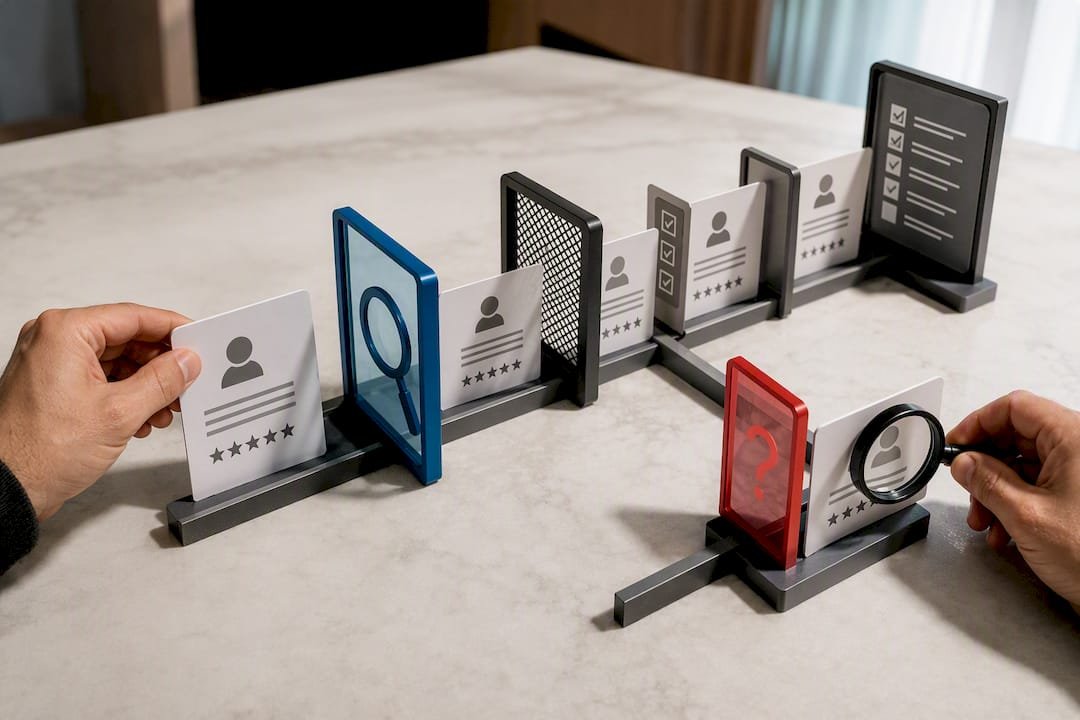
- Click through reviewer profiles. A profile with exactly one review, created the same month as the review itself, deserves skepticism. Accounts with a long history of varied reviews across unrelated products carry more weight.
- Check for 5-star-only history. Reviewers who never post anything below five stars, ever, often belong to incentivized or paid review networks rather than genuine player pools.
- Search the exact phrase. Copy a distinctive sentence from the review and search it. Finding it on three other casino listings confirms a template, not a testimonial.
This kind of behavioral analysis, paired with language checks, is exactly the hybrid approach that research reviews recommend as the most reliable detection strategy. Language alone misses coordinated campaigns; timing alone misses well-written individual fakes. Together, they catch far more.
Verifying the Claims: Licenses, Bonuses, and Independent Chatter
Once a review passes the language and timing checks, verify the actual claims it makes. This is where you separate a credible review from one that just sounds credible.
- License checks: Every legitimate operator lists a license number and regulator name in its footer. Cross-reference that number on the regulator’s own lookup page. If the review claims licensing but the number doesn’t match any public record, that’s disqualifying on its own. A guide on how to verify casino license status walks through exactly where to look.
- Bonus terms: Compare the bonus terms quoted in the review against the operator’s actual terms and conditions page. Reviews that inflate wagering requirements or omit maximum cashout caps are either outdated or deliberately misleading.
- Payout proof: Genuine payout claims usually come with a timestamped screenshot or a transaction reference, not just a sentence. Reverse-image search suspicious screenshots to check if they’re recycled from other sites.
- Independent forums: Cross-check sentiment on player forums and aggregator communities outside the review site itself. A pattern of complaints on independent forums that contradicts a glowing review is a serious flag.
- Certified operator lists: Checking a site against known certified and trusted gaming operators can add another layer of confirmation.
For a deeper walkthrough on separating genuine testimonials from planted ones, a guide to finding honest casino reviews covers the full verification workflow.
What to Do If You Suspect Fake Reviews
Spotting a fake review is only half the job. Protecting your money and flagging the fraud matters just as much.
- Pause before depositing. If reviews raised doubts, don’t fund an account yet. A small test deposit, using a payment method with strong buyer protection, is safer than committing your full bankroll.
- Preserve evidence. Screenshot the suspicious reviews, note the URLs, and capture timestamps before content gets edited or deleted.
- Check the operator against blacklists. Cross-reference the casino name against a list of blacklisted and risky sites before going further.
- Report where it counts. Flag the review to the platform hosting it, report suspicious patterns to consumer-protection channels, and note that regulators like the FTC actively penalize paid or suppressed reviews, which gives you a real reporting avenue, not just a complaint form that goes nowhere.
- Switch to a verified source. Once you’ve flagged the issue, move your research to a review hub that discloses its methodology.
Pro Tip: Bookmark two or three trusted review hubs and treat them as your first filter, before you ever open a search engine. It saves you from re-litigating the same verification process every time a new casino site catches your eye.
Why Verification Standards Are the Real Story Here
Fake review detection research proves something the industry doesn’t advertise: language models can catch fabricated text more reliably than most casual readers ever will on their own. That’s not a knock on players. It’s a reminder that even sharp, experienced bettors get fooled by well-written fakes, because the fakes are specifically engineered to sound like genuine experience.
What actually separates a trustworthy review site from an affiliate brochure is hands-on testing. Real review teams check license numbers against regulator databases, track player complaints over time, and update content when an operator’s payout speed or terms change. That kind of ongoing verification is harder to fake than a single review, because it requires sustained effort rather than a one-time burst of copy.
W88 News Today’s editorial process leans on exactly that discipline: license checks, player-feedback monitoring, and firsthand testing before a casino earns a recommendation. The goal isn’t to catch every fake review ever written. It’s to build a habit of checking before trusting, which protects your bankroll far better than any single red flag ever could.
— jeff
Find Vetted Reviews and New Game Alerts With W88news
Cross-checking license numbers and hunting down forum consensus takes real time, time most players would rather spend picking their next slot session. Some review platforms do that verification legwork upfront, so reviews may have already passed license checks, timestamp analysis, and cross-source consistency tests covered above.
Beyond vetted reviews, W88news also tracks new game releases across slots, table games, and live dealer studios, so you’re never relying on a stale writeup for a title that launched last month. If you want a shortcut past the manual checklist entirely, browse W88news’s vetted casino reviews and sign up for release alerts to catch new titles the moment they go live, verified before you ever place a bet.
Sources
- To spot fake online reviews, target the reviewers — UCLA Anderson Review
- Recent state-of-the-art of fake-review detection: a comprehensive review — Knowledge Engineering Review (Cambridge)
- Integrating psycholinguistics and transformer models for improved fake review detection — Journal article (Springer)
FAQ
What is the fastest way to spot a fake casino review?
Check the reviewer’s profile for a single-review history, look for a burst of similar reviews posted in the same short window, and scan the language for hyperbole with no specific details.
Can AI really tell fake reviews from real ones?
Yes. Transformer models like BERT have reached detection accuracies as high as 93% in controlled studies, often outperforming untrained human readers on the same task.
What should I do if I find fake reviews on a casino site?
Preserve screenshots and timestamps, avoid depositing until you’ve cross-checked the operator elsewhere, and report the reviews to the hosting platform or relevant consumer-protection body.
How do I verify a casino’s license claim in a review?
Look up the license number the review or operator cites directly on the regulator’s own database rather than trusting the number as written; W88news’s license verification guide walks through the exact steps.
Are single-review accounts always fake?
Not always, but they carry more risk. A profile with one review, created recently and posted alongside a cluster of similar five-star entries, deserves added scrutiny before you trust it.