



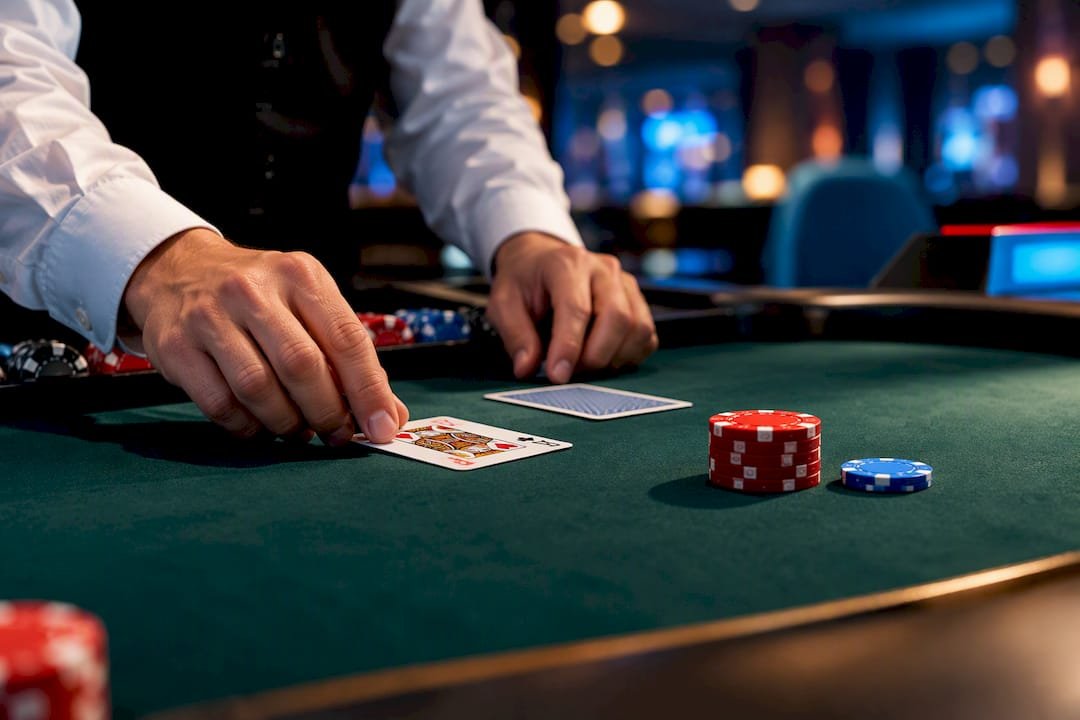
Blackjack side bets are optional wagers placed alongside your main hand, settled by different cards, and priced with a house edge that usually runs far higher than blackjack itself. Most carry a 2% to 13% edge depending on the paytable and deck count, versus roughly 0.5% for basic strategy blackjack. Treat them as entertainment, not a strategy: check the posted paytable before you bet, and cap what you’re willing to lose on them for the session.
TL;DR:
- Side bets have house edges ranging from 2% to over 13%, making them primarily entertainment bets rather than profitable strategies.
- The payout structure and house edge vary widely depending on the paytable, deck count, and game variant, even under the same name.
- Expected losses grow significantly with bet size and number of hands, often outweighing potential jackpots, especially with high-house-edge bets like Blazing 7s.
- Confirming the specific rules, paytable, and payout tiers before betting can prevent costly surprises and ensure more informed wagering.
- Basic blackjack strategy decisions remain unaffected by side bets, but disciplined bankroll management and verification are crucial for smarter play.
Table of Contents
- What Is a Blackjack Side Bet, Exactly?
- How Much Do Common Side Bets Actually Pay?
- Why Does House Edge Matter More Than the Jackpot Size?
- How Do You Verify a Side Bet Before You Play It?
- Are Blackjack Side Bets Worth It for Your Bankroll?
- Our Take on Side Bets and Smarter Play
- Explore More Blackjack Guides at W88 News Today
- Sources
- FAQ
What Is a Blackjack Side Bet, Exactly?
A side bet is a separate wager you place before the deal and is resolved independently of whether you win or lose your main hand. You can bust your blackjack hand and still collect on a side bet, or land a natural blackjack and still lose one. The two wagers don’t talk to each other.
Timing matters. Some side bets, like Insurance, get offered only after the deal, once the dealer shows a specific upcard. Others, like Perfect Pairs or 21+3, get placed in the same motion as your main bet, before any cards hit the felt. Knowing which cards actually settle the bet is step one of playing any of them intelligently, and it varies more than most players assume.
Here are the families you’ll run into at a physical table or inside an online blackjack lobby:
- Insurance: A side wager available only when the dealer’s upcard is an Ace, betting that the dealer has blackjack.
- Perfect Pairs / Pair bets: Pays based on whether your first two cards form a pair, with tiers for mixed, colored, or perfect (suited) pairs.
- 21+3 / Top 3: Combines your two cards with the dealer’s upcard into a three-card poker hand, paying on flushes, straights, and trips.
- Lucky Ladies / total-based bets: Pays based on your two-card total, often rewarding a 20 made from queens.
- 7s / Blazing 7s: Pays on drawing sevens, with escalating payouts for two or three sevens, sometimes across suits.
- Royal Match: Pays when your first two cards are suited, with a bigger payout for a suited king-queen.
- Dealer-event bets: Less common wagers tied to whether the dealer busts or hits a specific total.
The same bet name can hide wildly different math from one casino or software provider to the next. “21+3” at one table might carry a very different house edge than “21+3” at another, because the paytable tiers and the number of decks in play aren’t standardized across popular blackjack variations.
How Much Do Common Side Bets Actually Pay?
Here’s where the advertised excitement runs into the real math. Payout tiers look generous on the felt, but the house edge tells a very different story once you run the numbers.
- Insurance pays 2:1 when the dealer’s upcard is an Ace and the dealer holds blackjack. Taken as a blind, unconditional bet, it carries roughly a negative 7.6% expectation, according to a technical analysis of advanced insurance play by Michael Canjar. Insurance only turns profitable when the remaining shoe’s ten-card concentration exceeds one third, a threshold that generally requires card-counting-level tracking, not a gut feeling.
- Perfect Pairs / Pair bets typically pay out at multiple tiers, say 5:1 for a mixed pair, 10:1 for a colored pair, and 25:1 or higher for a perfect pair. Deck count swings the edge dramatically: one example paytable carries a 10.85% house edge with two decks, but the identical paytable drops to 1.28% at six decks and just 0.08% at eight decks. Fewer decks concentrate the pair possibilities differently than most players expect.
- 21+3 / Top 3 rewards flushes, straights, and three-of-a-kinds built from your two cards plus the dealer’s upcard. A standard six-deck 21+3 paytable runs a 3.24% house edge, but the “21+3 Xtreme” variant, with restructured tiers, can balloon to 13.39%. Same name, completely different price tag.
- 7s / Blazing 7s dangles top prizes as high as 200:1 for suited triple sevens. Despite that headline number, a typical six-deck Blazing 7s paytable runs an 11% to 12% house edge, among the steepest of any common side bet.
- Royal Match pays a modest 5:2 or so for any suited two-card hand, jumping to 25:1 for a suited king-queen. It’s a smaller, simpler bet, but the edge still typically sits well above the main game.
That single variable can matter more than the payout table itself.
Why Does House Edge Matter More Than the Jackpot Size?
House edge is the average percentage of every dollar wagered that the casino keeps over time. A 5% house edge means you lose an average of five cents per dollar bet, over enough hands for the math to smooth out. It’s the number that actually tells you what a bet costs, not the top prize printed on the felt.
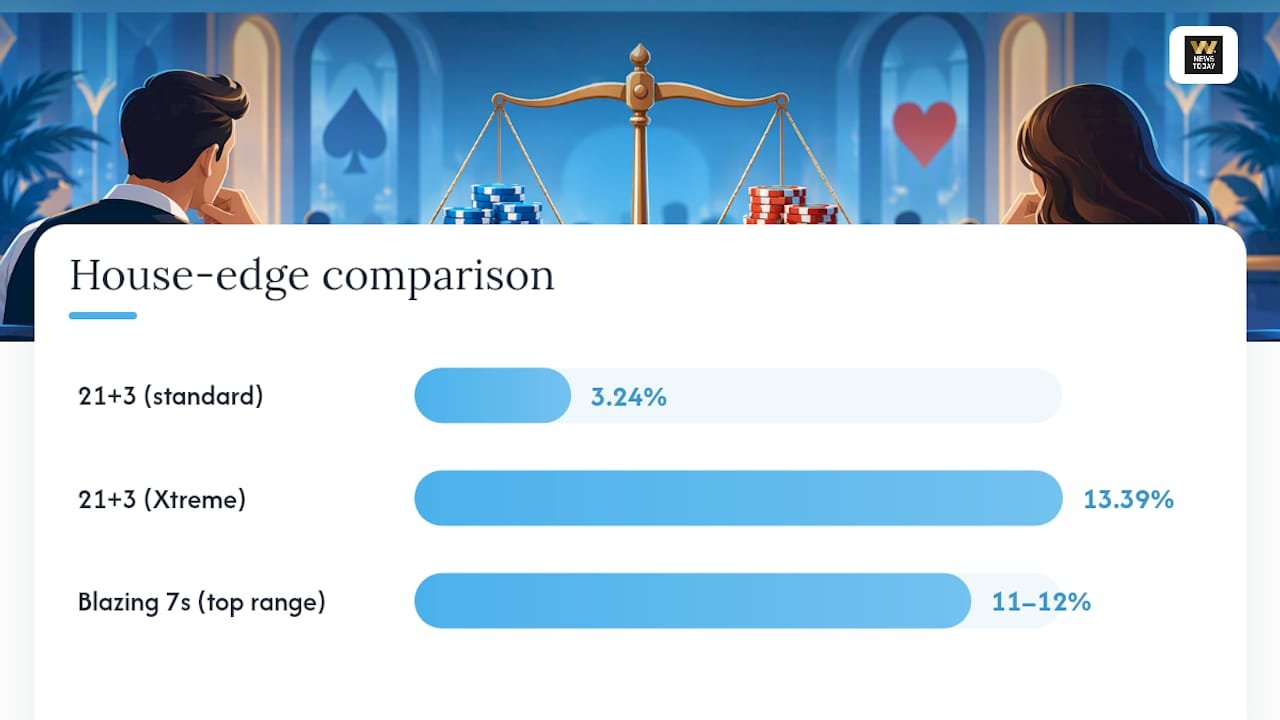
Wizard of Odds’ breakdowns make this concrete. The same 21+3 name can carry a 3.24% edge in a standard paytable versus 13.39% in the Xtreme version, a fourfold difference for a bet with an identical premise. Pair bets move even more dramatically by deck count, swinging from nearly 11% down to under 0.1%.
Run the numbers on a session and the pattern gets obvious fast. Betting $5 on a 21+3 with a 3.24% edge across 100 hands works out to an expected loss near $16, even though most individual hands lose nothing dramatic. Bet that same $5 on the Xtreme version, and the expected loss climbs to roughly $67 for the identical 100 hands. Small, repeated wagers compound quietly.
- Hit frequency (how often a bet pays something) tells you almost nothing about value.
- Jackpot size tells you even less. A Blazing 7s bet’s 200:1 top prize coexists with an 11% to 12% house edge, one of the worst bets on the layout.
- Expected loss per dollar, converting the edge into real session dollars, is the only comparison worth making before you bet, a point echoed in practical side-bet guidance from industry analysts.
- Progressive meters can shift the math favorably as they grow, but only if you check the eligibility and trigger rules first, since a big number on the sign doesn’t guarantee a big edge shift.
How Do You Verify a Side Bet Before You Play It?
Here’s a four-step check you can run in under a minute at the table or inside an online game’s help panel, borrowed from the kind of pre-bet discipline serious blackjack strategy players apply to every wager, not just the main hand.
- Identify the settlement cards. Does the bet resolve on your first two cards, your cards plus the dealer’s upcard, or the dealer’s final hand? This changes when you need to decide.
- Photograph or copy the exact paytable and deck count. Note any progressive meter value if one’s displayed. Paytables get swapped between tables and software providers more often than players notice.
- Confirm settlement and stake rules. Check the maximum side-bet stake, and if there’s a jackpot, its reset and eligibility conditions.
- Estimate your expected loss per dollar and set a fixed, optional budget before you repeat the bet across multiple hands.
Pro Tip: Before you deposit at an online or live-dealer table, expand the game’s rules panel and confirm whether a dealer bust or a player blackjack changes how the side bet settles. That one detail trips up more players than any paytable number.
Are Blackjack Side Bets Worth It for Your Bankroll?
Basic strategy for your main hand doesn’t change because you’ve placed a side bet, and that’s worth repeating because plenty of players assume otherwise. Your blackjack basic strategy decisions, hit, stand, double, split, stay identical whether or not you’ve got a Perfect Pairs wager sitting next to your chips. Side bets are a completely separate financial decision layered on top of the main game.
That separation is exactly why bankroll discipline matters here.
A few habits reliably lose money faster than the house edge alone would suggest:
- Increasing your side bet after a near-miss, on the theory that a big pair or flush is “due.”
- Chasing a growing progressive meter without checking its actual eligibility and reset rules first.
- Raising your side-bet size after losses to “get even,” which just multiplies your exposure to an already unfavorable bet.
If a progressive jackpot has genuinely grown large, it’s worth rechecking the paytable, since the math behind jackpot mechanics can shift meaningfully once a meter passes certain thresholds, but that’s the exception, not the rule.
Our Take on Side Bets and Smarter Play
Learn the main game first. A player who has basic strategy down cold and still wants extra action from a side bet is in a completely different position than one hoping a Perfect Pairs bet will bail out a shaky main-hand decision. Run the four-step checklist every time, keep a fixed optional budget separate from your real bankroll, and you’ll never be surprised by a paytable again. For readers who want the deeper strategy work, our charts and guides on w88news.today go well beyond this overview.
— jeff
Explore More Blackjack Guides at W88 News Today
Once you’ve got the side-bet math down, the next move is locking in the main game, and that’s exactly where our guides at W88 News Today pick up. We break down basic strategy charts, RTP explanations, and paytable checklists so you’re never guessing what a bet actually costs before you place it.

Beyond strategy content, our team provides updates on game releases to keep content fresh and informative. If you’re comparing where to play, our bonus comparisons cover cashback, free spins, and welcome offers across reviewed operators, giving you a fuller picture before you deposit anywhere. Head to W88news to browse the full library of strategy charts, side-bet breakdowns, and the latest casino game releases, and bookmark it as your reference the next time a dealer asks if you’d like insurance.
Sources
For readers who want to check these figures directly, Wizard of Odds publishes detailed return tables for 21+3, Pair bets, and 7s/Blazing 7s. The Nevada Gaming Control Board’s Blackjack Live rules of play document shows how regulators define separate side-wager paytables. For the technical case on insurance, see Michael Canjar’s analysis of advanced insurance play.
- Pair blackjack side bet — Wizard of Odds
- Advanced Insurance Play in 21: Risk Aversion and Composition Dependence — Michael Canjar
FAQ
What Is the 777 Rule in Blackjack?
The “777 rule” usually refers to a Blazing 7s or 7s side bet, which pays escalating prizes for drawing two or three sevens, including a top payout of 200:1 for suited triple sevens. Despite that headline number, a typical six-deck version carries an 11% to 12% house edge, among the steepest side bets available.
How Should You Bet on Blackjack Side Bets?
Always check the exact posted paytable and deck count first, since identical bet names can carry house edges that differ by several percentage points depending on the paytable version.
Is Insurance Ever a Good Bet in Blackjack?
Insurance is a negative-expectation bet, roughly negative 7.6%, when taken blindly against a dealer Ace. It only becomes profitable when the remaining shoe’s ten-card concentration exceeds one third, which typically requires card-counting knowledge most casual players don’t have.
Do Side Bets Change My Basic Strategy Decisions?
No. Basic strategy for hitting, standing, doubling, and splitting on your main hand stays identical whether or not you’ve placed a side bet. The two wagers settle independently, so your main-hand strategy never needs to adjust for a side bet sitting next to it.
What’s the Best Way to Check a Side Bet Before Playing?
Run a quick four-step check: confirm which cards settle the bet, photograph the exact paytable and deck count, verify the maximum stake and any jackpot rules, then estimate your expected loss per dollar before setting a fixed budget. This takes under a minute and prevents most surprises at the table.