




Three Card Poker is a fast, house-banked casino table game played heads-up against the dealer, built around three core bets: Ante, Pair Plus, and Ante Bonus. This guide walks you through the rules, the hand rankings, the numbers behind them, and the one strategy rule that keeps your losses in check: play Q-6-4 or better, fold anything weaker. You will also get a quick, honest look at where things stand legally if you are reading this from India.
TL;DR:
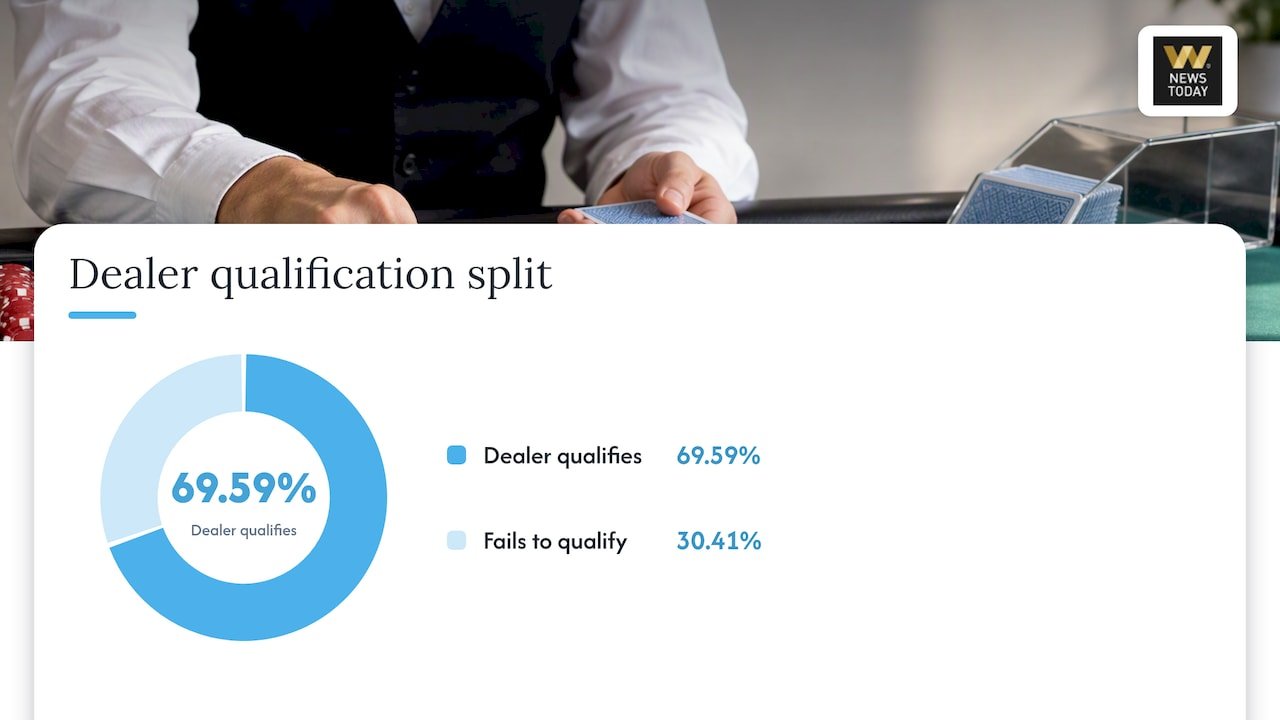
- The dealer qualifies with Queen-high or better approximately 69.59% of the time, which is crucial to understanding the strategy and expected outcomes.
- Playing hands of Queen-6-4 or better aligns with optimal strategy, as weaker hands are statistically unlikely to win against a qualifying dealer hand.
- Side bets like Pair Plus and Ante Bonus have higher variance and house edges, so they should be considered optional rather than core strategies.
- Chasing larger hands or over-betting side bets significantly increases your expected loss, making disciplined bankroll management essential.
- Online money games in India are currently prohibited under new regulations, with no licensing pathway and restrictions on payment channels, requiring careful platform verification.
Table of Contents
- How to play: step-by-step rules you can use at a table
- Hand rankings and key probabilities in Three Card Poker
- Bets and typical paytables: how Pair Plus and Ante Bonus stack up
- Basic strategy: the Q-6-4 rule and when to bend it
- Popular variants and how they change the game
- What PROGA means for online money games
- Why trust this guide
- How dealer qualification shapes every decision you make
- A hand from deal to payout, step by step
- Choosing where to put your money: Ante/Play versus Pair Plus
- Mistakes that quietly drain your bankroll
- When Three Card Poker fits your night at the tables
- Bringing your Three Card Poker knowledge to the table
- Sources
- FAQ
How to play: step-by-step rules you can use at a table
Three Card Poker moves fast, and that is exactly why players love it. There is no complicated betting round, no community cards, just one clean decision per hand. Here is the sequence you will follow every single time you sit down:
- Place your Ante bet, and add a Pair Plus wager if you want extra shots at a bonus payout.
- The dealer deals three cards to you and three to themselves, all face down.
- Look at your hand and choose: fold and lose your Ante, or place a Play bet equal to your Ante to stay in.
- The dealer reveals their hand and must qualify with Queen-high or better for the Ante and Play to resolve normally.
- If the dealer does not qualify, your Ante pays even money and your Play bet pushes; if they qualify, both bets pay or lose based on whose hand ranks higher.
That qualification rule matters more than it looks. It softens the blow when the dealer’s hand is weak, which is one reason the game was created by Derek Webb in 1994 as a simplified alternative to standard poker.
Hand rankings and key probabilities in Three Card Poker
Three-card hand rankings flip a rule you might know from five-card poker. Here, a straight beat a flush, because with only three cards, a straight is statistically harder to hit than a flush. The best possible hand, a mini-royal (A-K-Q suited), sits at the top as the strongest straight flush.
The dealer qualifies with Queen-high or better roughly 69.59% of the time, which is the backbone of most basic strategy charts.
House edge check: Three Card Poker’s Ante/Play combination carries a house edge of about 3.37%, though the exact figure shifts slightly with the paytable a casino uses.
Bets and typical paytables: how Pair Plus and Ante Bonus stack up
Pair Plus and Ante Bonus pay out regardless of what the dealer holds, which makes them tempting, but their paytables carry more variance and often a steeper house edge than the main Ante/Play bet.
- Straight flush: typically pays 40 to 1 on Pair Plus.
- Three of a kind: typically pays 30 to 1.
- Straight: typically pays 6 to 1.
- Flush: typically pays 3 to 1.
- Pair: typically pays 1 to 1.
House edge comparison: the Ante/Play bet sits near 3.37%, while Pair Plus paytables can push the edge noticeably higher depending on the specific paytable a casino runs, a variance Wizard of Odds documents across different table versions. Since dealer qualification only affects the Ante and Play bets, a losing Play hand still lets a strong Pair Plus payout land independently. For most players, prioritizing Ante/Play and treating Pair Plus as an occasional side bet rather than a core strategy keeps your bankroll healthier over a session.
Basic strategy: the Q-6-4 rule and when to bend it
The entire strategic core of Three Card Poker fits in one line: play any hand of Queen-6-4 or better, fold everything weaker.
- Play Q-6-4 or stronger: these hands beat a qualifying dealer often enough to justify matching your Ante with a Play bet.
- Fold weaker hands: the math favors surrendering your Ante rather than doubling your risk on a hand unlikely to win.
- Skip stacking side bets: Pair Plus and Ante Bonus add fun, but leaning on them raises your average loss per hand.
The logic is straightforward. Since the dealer qualifies with Queen-high or better about 69.59% of the time, a hand at or above Q-6-4 wins often enough against qualifying dealer hands to make the extra Play bet worth the risk, keeping the overall edge near 3.37%. Deviating only makes sense if you are chasing a bonus jackpot for entertainment value or playing a tournament format where variance itself is the goal.
Pro Tip: Set a per-session bankroll before you sit down, and treat Pair Plus as a bonus flourish rather than your main betting line.
Popular variants and how they change the game
Casinos have built several spins on the core format, and each one shifts your decision-making slightly.
- Face-up Three Card Poker: one dealer card is exposed before you decide, which changes your fold frequency and typically trims bonus payouts to balance the extra information.
- Prime Three Card Poker: adds a color-based side wager where suited or colored combinations across your hand and the dealer’s pay extra, layering more variance onto the base game.
- Six-card bonus: combines your three cards with the dealer’s three to form the best possible five-card hand, unlocking bigger payouts but with far higher swings than the standard game.
The base Q-6-4 rule still applies in every variant’s core Ante/Play decision. Side wagers like Prime and the six-card bonus simply add extra layers you should treat as optional flair rather than strategy essentials.
What PROGA means for online money games
If you are reading this in India, there is a regulatory shift you need to know about. The Promotion and Regulation of Online Gaming Act, 2025 and its accompanying rules took effect on May 1, 2026, and they impose a blanket prohibition on online money games nationwide, with no licensed exception carved out for casino-style titles like Three Card Poker.
- No licensing path exists: the law does not create a route for operators to legally offer online money games in India.
- Payment channels are restricted: platforms determined to be offering online money games face suspension of payment facilitation, a mechanism detailed in legal analyses of the new Authority’s Determination Orders.
- Verification matters more than ever: before depositing anywhere, confirm a platform’s current compliance status rather than assuming past availability still holds.
For a fuller breakdown of what changed and what it means for players, our guide to India’s online casino legality walks through the practical details.
Why trust this guide
This article was written by Jeff, a contributor to W88 News Today, drawing on primary-source legal citations and established gaming references for odds, paytables, and hand frequencies. W88 News Today covers ongoing iGaming developments and new game releases across the casino and sportsbook space, alongside dedicated poker coverage for readers who want strategy beyond the table basics. Every figure here traces back to a named source, and the site’s responsible gaming stance means facts like the May 1, 2026 regulatory date get flagged clearly rather than glossed over.
How dealer qualification shapes every decision you make
The Queen-high qualification rule is the single biggest factor separating Three Card Poker from a coin-flip game, and it is worth understanding exactly why. When the dealer fails to qualify, meaning their best card falls below a Queen with no pair or better, your Ante automatically pays even money regardless of what you are holding, and your Play bet simply pushes back to you untouched. That protection is built into the math behind the Q-6-4 rule.
Think about what this means practically. If you hold a marginal hand like Jack-8-4, you might be tempted to fold out of caution. But because roughly 69.59% of dealer hands qualify, the remaining 30% or so either push your Play bet or hand you an outright win on the Ante alone. That non-qualifying slice of outcomes is exactly why basic strategy charts land where they do: the threshold accounts for how often you get a free pass regardless of your cards.
This is also why chasing bigger hands before playing is the wrong instinct. Waiting for a pair or better before committing to Play throws away too many hands that would have profited from the qualification safety net. The rule exists precisely so recreational players do not need to calculate live odds at the table, they need only remember one three-card benchmark and trust that the dealer’s own qualification requirement is doing quiet work in their favor on a meaningful share of hands.
A hand from deal to payout, step by step
Picture a typical round. You place a $10 Ante and a $5 Pair Plus wager, then the dealer deals three cards face down to you and three to themselves. You peek and see Queen-8-3, a hand that clears the Q-6-4 threshold comfortably, so you place a $10 Play bet to match your Ante.
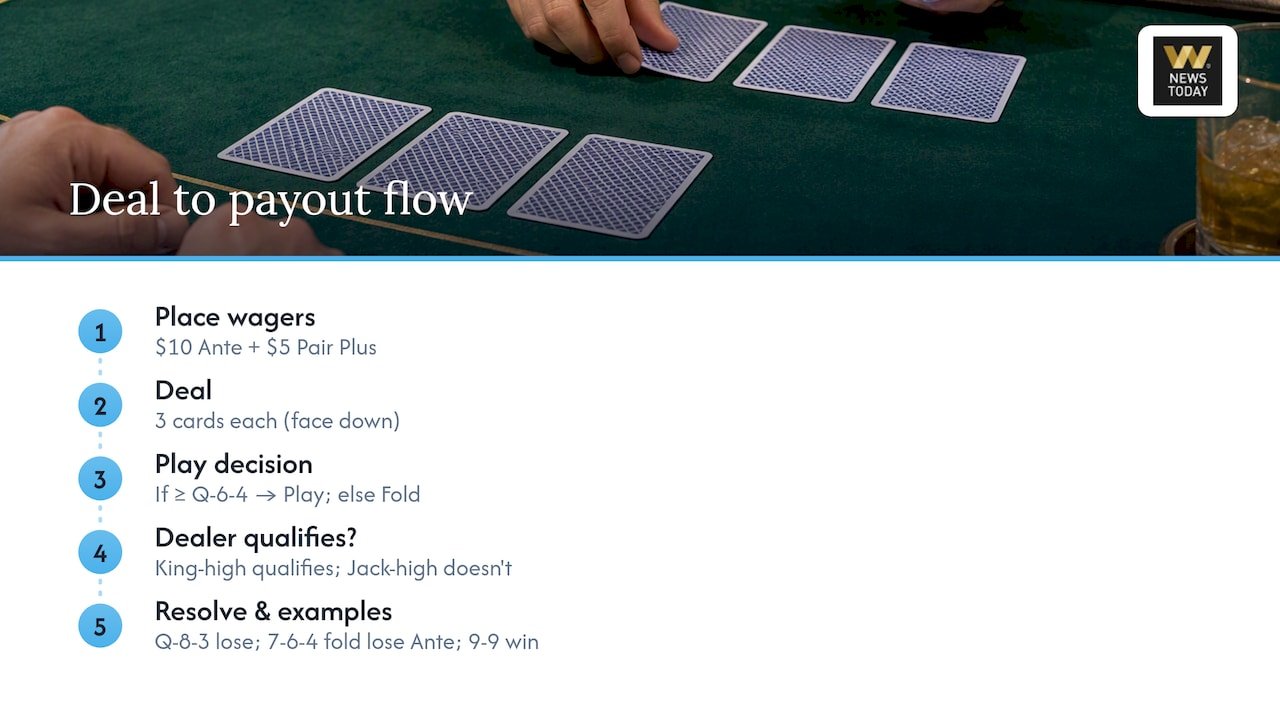
The dealer turns over their hand: King-high with no pair, which qualifies since a King beats the Queen-high minimum. Their hand happens to be King-9-2. Comparing high cards, your Queen loses to their King, so both your Ante and Play bets lose. Your Pair Plus wager, judged independently of the dealer’s hand, also loses since Queen-8-3 has no pair, straight, or flush.
Now imagine a second round where you are dealt 7-6-4, a hand below the Q-6-4 line. Correct strategy says fold, surrendering only your $10 Ante rather than risking a second $10 on a hand unlikely to beat a qualifying dealer. If the dealer’s hand in that round happened to be Jack-high, non-qualifying, folding would have cost you the chance at an even-money Ante win and a Play push, but strategy is built on long-run averages, not single-hand hindsight.
A third scenario: you hold a pair of nines. This clears Q-6-4 easily, so you play. Even against a qualifying dealer hand, a pair beats any unpaired high-card hand, so you collect on both Ante and Play, plus a Pair Plus bonus if you placed one.
Choosing where to put your money: Ante/Play versus Pair Plus
These two betting lines reward completely different mindsets, and mixing them up is where a lot of players lose more than they need to. The Ante/Play bet is a skill-adjacent decision: your Q-6-4 call directly shapes your expected outcome, and sticking to strategy keeps the house edge anchored near 3.37%.
Pair Plus, by contrast, is a pure luck bet with zero decisions after you place it. You are wagering purely on whether your three cards form a pair or better, with no fold option and no dealer interaction. That means no strategy chart applies once the cards are dealt, your outcome is locked in the moment you see your hand.
The practical takeaway: treat Ante/Play as your primary, skill-informed bet where discipline pays off over time, and treat Pair Plus as a smaller, optional wager you place only when you are comfortable with its higher variance. Players who split their bankroll evenly between the two often end up with a worse overall expected loss than those who lean on Ante/Play and use Pair Plus sparingly. If you enjoy the appeal of a straight jackpot shot, a modest Pair Plus wager alongside disciplined Ante/Play play satisfies both instincts without overexposing your bankroll to the weaker-EV bet.
Mistakes that quietly drain your bankroll
Most Three Card Poker losses come from a handful of repeated habits rather than bad luck.
- Playing hands below Q-6-4: the single most common error, driven by impatience rather than math.
- Over-betting Pair Plus: treating a pure-luck side bet as your main strategy inflates your average loss per hour.
- Ignoring bankroll limits: chasing a bad session by raising bets rarely recovers losses and usually deepens them.
- Misreading the qualification rule: some players fold hands that would have pushed anyway had they understood the Queen-high threshold protects weak hands against non-qualifying dealers.
- Skipping platform verification: especially relevant right now, confirming a site’s current legal and payment status before depositing avoids headaches later.
Avoiding these five habits does more for your long-term results than any side bet ever will.
When Three Card Poker fits your night at the tables
Three Card Poker suits players who want a quick, low-decision game rather than a deep skill grind. It rewards a casual night out more than it rewards a player chasing a mathematical edge, since one strategy rule covers nearly every situation you will face. If that is your speed, stick to Q-6-4, keep side bets modest, and set your bankroll limit before you sit down.
— jeff
Bringing your Three Card Poker knowledge to the table
Knowing the rules is one thing, finding a casino with bonus offers you can trust for playing Three Card Poker is another. Our casino review hub breaks down platforms by payout reliability, game selection, and verified terms, so you spend less time digging through fine print and more time playing hands you already understand. Whether you are weighing a new casino site or double-checking one you already use, our reviews give you the concrete details, licensing, payout speed, game libraries, before you commit a deposit. Start with the review hub to compare your options with the same clarity you now bring to a Three Card Poker table.
Sources
- Press Information Bureau: Promotion and Regulation of Online Gaming Act, 2025 (PROGA) — press release
- CardPlayer — How to Play 3 Card Poker
- Wikipedia — Three-card poker
- Wizard of Odds — Three Card Poker
FAQ
Is Three Card Poker luck or skill?
Three Card Poker leans heavily on luck since you cannot change your cards, but the fold-or-play decision on Ante/Play is where a simple strategy rule like Q-6-4 gives you a measurable edge over guessing. Pair Plus, on the other hand, is pure chance with no decision involved once your cards are dealt.
What is another name for Three Card Poker?
Three Card Poker is sometimes marketed under variant names tied to its side bets or presentation, such as face-up versions or Prime Three Card Poker, but the core three-card format remains the same game created by Derek Webb in 1994.
How do you play a hand of three cards?
You place an Ante, receive three cards face down, and decide whether to fold or match your Ante with a Play bet based on your hand strength. The dealer then reveals their three cards, and if they qualify with Queen-high or better, the higher hand wins both the Ante and Play bets.
How is three-player poker different from Three Card Poker?
Three-player poker usually refers to standard poker variants like Texas Hold’em played with three people at the table, where players compete against each other rather than a dealer. Three Card Poker is always played heads-up against the house, with no other players at the table affecting your hand.
What house edge should I expect on Three Card Poker?
The Ante/Play bet carries a house edge of about 3.37% when you follow correct Q-6-4 strategy, though the exact number shifts slightly depending on a casino’s specific paytable. Pair Plus and other side bets can carry a different edge depending on their payout structure.