




Draw No Bet (DNB) removes the draw: you win if the team wins, get your stake back if it draws, and lose if it loses. It only tracks two outcomes instead of three, which is why sportsbooks trim the odds compared to a standard match-winner bet. Think of it as a cushion for matches where you like a team but a stalemate is a real risk.
TL;DR:
- Draw no bet reduces risk by refunding stakes if the match ends in a draw, typically lowering odds compared to the standard 1X2 market.
- It is best used for tight matchups, especially when backing underdogs or in-play when a favorite trails, rather than on heavy favorites already at low odds.
- DNB settlement is usually based on the 90-minute result, with voided draws and aborted games refunded or voided according to bookmaker rules.
- Incorporating DNB into accumulators or bet builders causes void legs to be removed, altering overall payout and payout calculations.
- Comparing the DNB odds with the standard 1X2 payout helps assess whether the draw protection justifies the lower return.
Table of Contents
- How draw no bet works, with a clear numeric example
- How DNB compares to 1X2, double chance, and Asian handicap 0
- When to use draw no bet: practical strategies and examples
- Settlement edge cases and bookmaker terms to check
- How DNB affects accumulators, bet builders, and free-bet stakes
- W88 News Today expert checklist and practical tips
- Author perspective: when DNB fits a bettor’s style and bankroll
- Sources
- FAQ
How draw no bet works, with a clear numeric example
You will find DNB sitting right next to the 1X2 market on most sportsbook match pages, usually labeled “Draw No Bet” or “DNB” under match odds. Pick a side, place your stake, and the market tracks just that team’s win or loss. A draw does not beat you, it simply cancels the bet.
Settlement follows the 90-minute result including stoppage time, the same clock used for the base match-winner market. If your team is level when that whistle blows, the bookmaker voids the bet and refunds your stake in full, no profit, no loss.
Here’s where the math gets interesting. Say a team is priced at 2.30 to win outright in the 1X2 market.
- In the DNB market, that same team might shift to around 1.70.
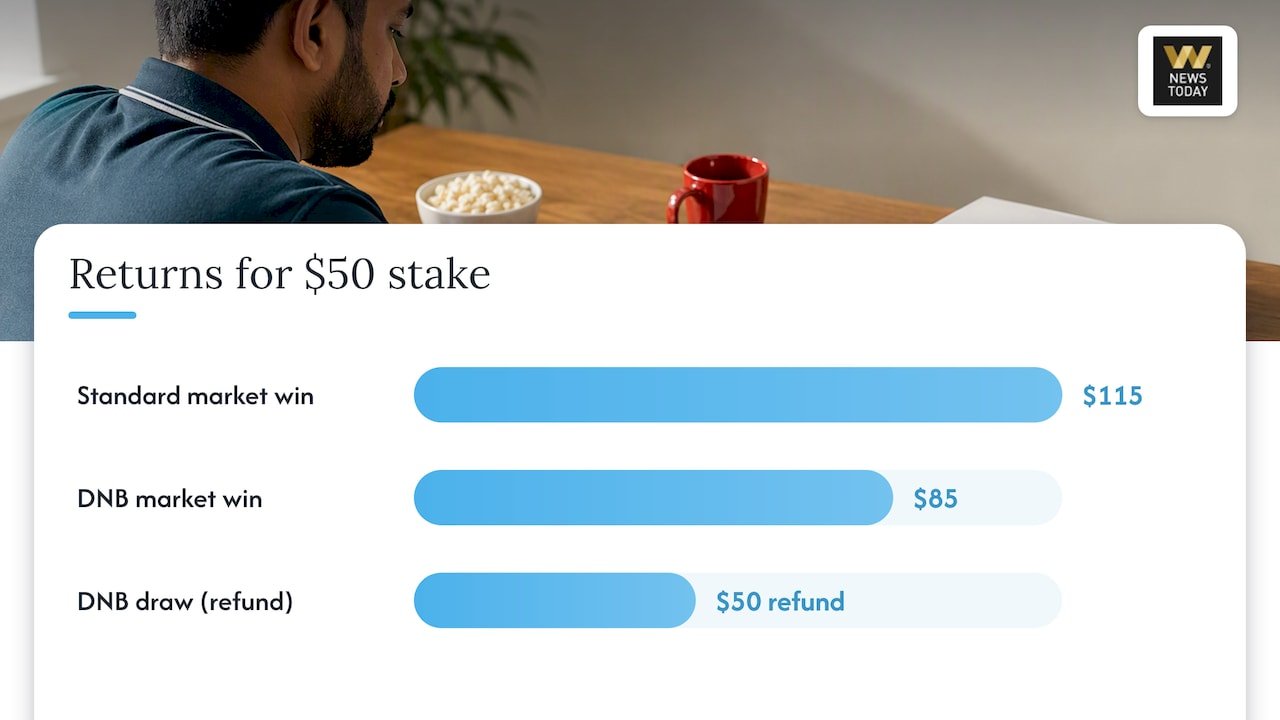
- A $50 stake at 2.30 pays $115 if the team wins outright.
- The same $50 at 1.70 in DNB pays $85, a smaller return in exchange for the draw being covered.
A win price of roughly 2.30 in the standard market can drop to around 1.70 in DNB, according to reporting on how these markets are priced. That gap is the cost of removing your riskiest outcome.
How DNB compares to 1X2, double chance, and Asian handicap 0
Picking the right market comes down to what risk you are willing to carry.
- 1X2 (match odds): pays the most but a draw is a total loss, fine when you are confident there will be a clear winner.
- Draw No Bet: shorter odds than 1X2, but a draw refunds your stake instead of burning it. This is better when a draw is a genuine possibility.
- Double chance: covers two of three outcomes (win or draw, or win for either team), which pays out more often but at odds even shorter than DNB since you are betting on a draw actually happening in your favor rather than just surviving it.
- Asian handicap 0: functions almost identically to DNB, a draw voids the bet, though the line and payout structure can differ slightly by sportsbook, so check the settlement terms before assuming they behave the same.
DNB sits in the middle: less protection than double chance, more protection than a straight win bet, and a cleaner structure than most handicap lines.
When to use draw no bet: practical strategies and examples
DNB earns its keep in specific match situations rather than as a blanket strategy.
- Backing an underdog in a tight matchup. If a lower-ranked team has a real shot but a draw feels likely, DNB lets you back them without fearing a stalemate wipes out your stake.
- Going in-play when a favorite is trailing. If the favorite is down 0-1 with 20 minutes left, DNB odds on them lengthen, offering better value than trying to time a straight win bet as they push forward.
- Skipping DNB on heavy pre-match favorites. When a team is already priced at 1.30 or shorter in 1X2, DNB odds barely move, so you are risking a similar amount for almost no extra safety.
Pro Tip: Compare the 1X2 price against the DNB price before staking. If the gap is small, the draw protection is not worth the discount, and you are better off elsewhere.
Settlement edge cases and bookmaker terms to check
Most DNB confusion comes from cup competitions and interrupted matches, not regular league play.
- Extra time and penalties: in knockout matches, DNB is typically settled on the 90-minute score, so a draw at that point voids the bet regardless of what happens in extra time or a shootout, though this is standard practice rather than a universal rule.
- Abandoned or postponed games: these are generally voided entirely unless the sportsbook states otherwise, meaning your stake comes back either way.
- Always check the fine print: every bookmaker publishes its own settlement rules, and it takes thirty seconds to confirm before you stake real money on an assumption.
How DNB affects accumulators, bet builders, and free-bet stakes
Adding a DNB leg to a multiple changes how the whole bet behaves if that leg pushes.
- Void legs shrink your acca: a five-leg accumulator with one DNB leg that ends in a draw becomes a four-leg accumulator, with that leg simply removed from the calculation rather than costing you the bet.
- Cash versus free bets: cash stakes on a voided DNB leg are refunded, but many sportsbooks void the entire free bet instead of returning it if you used a promotional stake and the match ends level.
- Bet builders react the same way: a voided DNB selection inside a custom bet builder recalculates your payout around the remaining legs.
A five-leg accumulator loses one leg to a DNB void and becomes a four-leg accumulator, per standard settlement practice, which changes your total payout even though the rest of your picks won.
W88 News Today expert checklist and practical tips
Before you stake anything on DNB, run through this short list.
- Compare the 1X2 price against the DNB price to see how much protection you are actually paying for.
- Confirm the sportsbook’s settlement rule, especially for cup ties with extra time.
- Check whether a free bet gets refunded or voided outright if your DNB selection ends in a draw.
Pro Tip: If you want to lock in profit mid-match rather than wait for full time, our hedging bets guide walks through the formula with a worked example. Readers new to odds conversions might also want our betting odds primer as background before diving deeper into DNB strategy.
Author perspective: when DNB fits a bettor’s style and bankroll
I treat DNB as a risk-management tool, not a path to long-term edge. It smooths out variance on matches where a draw genuinely worries me, nothing more. If you are testing it out, start with small stakes and track your results over a few dozen bets before trusting your instincts. DNB works best as one layer in a staking plan, sitting alongside straight win bets and hedges rather than replacing them entirely.
— jeff
Sources
- What does draw no bet mean and when best to use it? | The Independent
- What does draw no bet mean? | The Standard
Ready to put this into practice? Our sports betting tips page rounds up practical staking ideas beyond DNB, and if football markets are not your focus, our tennis betting strategy guide applies similar risk-management thinking to a different sport. We also cover new game releases related to casino and sportsbook platforms, providing content beyond match odds.
FAQ
Is draw no bet a good strategy?
DNB works well as a risk-management tool for matches where a draw is a real possibility, particularly when backing an underdog or a team in a tight game. It is not a guaranteed long-term edge, it simply trades a lower payout for protection against one specific outcome.
Does draw no bet mean you get your money back?
Yes, if the match ends in a draw after the 90-minute result including stoppage time, your stake is refunded in full. You neither win nor lose on that outcome, the bet is simply voided.
Which is better, draw no bet or double chance?
It depends on what you want covered. DNB backs one team and refunds a draw, while double chance covers two of the three possible outcomes but at shorter odds since it includes an active win for the draw scenario.
What does “draw no bet” mean on a sportsbook platform?
On most sportsbook platforms, “draw no bet” is a market where your stake is refunded if the match ends level, and you win or lose normally if either team wins. It sits alongside the standard 1X2 market on most match betting pages and follows the same platform’s general settlement terms.