





Licensed online slots are not rigged in the sense of real-time manipulation. Every spin outcome at a properly regulated casino is generated by a certified Random Number Generator (RNG), verified by an independent testing lab, and governed by a published Return to Player (RTP) percentage that regulators require operators to disclose. The real risk is not a licensed casino quietly flipping a cheat switch. It is an unlicensed or offshore site that has never been audited at all.
Here is what separates a fair game from a fraudulent one:
- Licensed operators must submit games to accredited labs before launch. No certification, no live game.
- RNG certification confirms that spin outcomes are statistically random and match the published math model.
- Published RTP tells you the long-run payout percentage. A house edge is not cheating. It is the disclosed cost of play.
- State regulators in New Jersey, Nevada, Pennsylvania, and Michigan enforce audit trails, version control, and player-complaint procedures.
- Unlicensed sites carry the genuine risk: no independent testing, no accountability, and documented cases of manipulated payout rates.
The question of whether online slots are rigged comes down to one distinction: licensed vs. unlicensed. Stick with licensed operators, verify the credentials yourself, and the math works exactly as advertised.
Table of Contents
- How are online slot outcomes actually generated?
- What do RTP and house edge actually mean?
- How do U.S. regulators and state licenses protect you?
- How can dishonest sites rig games or scam players?
- How do you verify a casino’s fairness before depositing?
- What should you do if you suspect a slot is rigged?
- Practical tips for safer play and responsible gambling
- Why do players still believe slots are rigged, even at licensed casinos?
- Key Takeaways
- The part most fairness guides skip
- Useful sources for verifying licenses, labs, and getting help
- FAQ
How are online slot outcomes actually generated?
Every spin you trigger on a licensed slot does not pull from a pre-set sequence or a deck of cards. It samples a value from an RNG that runs continuously in the background, thousands of times per second, whether anyone is playing or not. The moment you hit spin, the game captures the current output and maps it to a set of virtual reel positions. That mapping determines your result.
Two properties make real-time manipulation practically impossible in a certified game. First, the RNG has no memory. The outcome of spin 500 carries zero information about spin 501. A losing streak of 20 spins does not make a win more likely on spin 21. Second, the mapping between RNG output and reel symbols is locked into the game’s certified math model. An independent lab verifies that millions of simulated spins match the published RTP before the game ever goes live.
What players often mistake for rigging is simply randomness plus a house edge. Randomness does not mean evenly distributed wins. It means each spin is unpredictable and independent. Add a house edge of 3%–6% and the math guarantees the casino earns a profit over millions of spins, while individual sessions swing wildly in either direction. That swing is variance, not manipulation.
Pro Tip: Open any slot’s info panel (usually a “?” or “i” button) before you spin. You will find the RTP percentage and often the volatility rating. On top-rated online slots, these figures are displayed clearly. If a game hides them or shows no info panel at all, treat that as a red flag.
What do RTP and house edge actually mean?
RTP stands for Return to Player, and it is the single most important number on any slot’s info panel. If a game carries a 96% RTP, the math model is designed so that, over a statistically significant number of spins, the game returns $96 for every $100 wagered. The remaining $4 is the house edge. The relationship is simple: house edge = 100% minus RTP.
Most regulated online slots carry RTPs in a typical range disclosed by regulators. That house edge is not a secret. It is disclosed, certified, and is the entire reason casinos can operate profitably without touching individual spin outcomes. Licensed operators earn their profit through the house edge, and regulatory oversight plus market incentives make tampering with payouts an irrational business decision.
The critical detail most players miss: RTP is a long-run average, not a session guarantee. A 96% RTP slot might pay out 140% over your 50-spin session or 60%. Both outcomes are mathematically normal. You need millions of spins across all players to observe the published RTP reliably. Your individual session is a tiny, noisy sample.
Different RTP configurations can be certified and published. Some operators configure games at the lower end of a certified range (say, 94%) while others set the same game title at 96%. Both are legal, provided the configuration is disclosed and certified. Transparency is the standard, not a fixed universal rate.
How do U.S. regulators and state licenses protect you?
State-level regulation is the backbone of online slot fairness in the United States. Unlike offshore jurisdictions that may issue licenses with minimal oversight, U.S. state gaming boards impose pre-launch requirements, ongoing audit obligations, and enforceable player protections. Licensed operators face real penalties including fines and license revocation if they tamper with RNG behavior or payout rates.
The key regulatory bodies you should know:
- Pennsylvania Gaming Control Board (PGCB): — Requires operators to use approved testing labs and submit game math documentation. Pennsylvania also mandates responsible-gambling tools as a condition of licensure.
Before a game goes live in any of these states, the operator must submit the game’s math model, RNG documentation, and a test-lab certificate to the regulator. Version control is enforced: if a game is updated, the new version must be re-certified. Regulators also require operators to maintain audit trails so that any disputed spin can be reconstructed.
For player protections, licensed U.S. operators must offer deposit limits, self-exclusion programs, and a documented complaint-handling process. Funds are typically held in segregated accounts, meaning your balance is protected even if the operator faces financial difficulty. Understanding why certified casinos matter is the first practical step toward safer play.
| Dimension | Licensed U.S. State Operator | Offshore / Unlicensed Operator |
|---|---|---|
| How fairness is verified | Independent lab certification (GLI, BMM, eCOGRA, iTech Labs, NMi) required before launch | No mandatory independent testing; operator self-certifies or uses unaccredited labs |
| Published RTP / house edge | Disclosed in-game and in regulator filings; certified tolerance band enforced | May be advertised but not independently verified; actual payout rate unconfirmed |
| Regulatory jurisdiction | State gaming board (NJ DGE, NGCB, PGCB, MGCB) with enforcement powers | Foreign jurisdiction with limited or no enforcement reach for U.S. players |
| Evidence of independent testing | Clickable test-lab seals with verifiable report IDs; regulator-approved lab list | Seals may be decorative or link to operator-controlled pages |
| Player protections | Segregated funds, ADR process, self-exclusion, complaint escalation to regulator | No guaranteed fund segregation; dispute resolution at operator’s discretion |
| Warning signs / complaint history | Regulator enforcement database publicly searchable | No public enforcement record; complaint forums are the only signal |
How can dishonest sites rig games or scam players?
The risk of a genuinely rigged slot is real, but it lives almost entirely in the unlicensed space. Unlicensed and offshore casinos have been documented running games with manipulated RTPs, fake certification seals, and withdrawal processes designed to prevent players from ever collecting winnings.
Common tactics used by fraudulent operators:
- Fake licensing seals: A logo that looks like a state gaming board or a well-known test lab, but links to a page the operator controls or to nothing at all.
- Manipulated game builds: A custom version of a legitimate game title where the math model has been altered to reduce the actual payout rate below the advertised RTP.
- Undisclosed RTP configurations: Advertising a 96% RTP in marketing materials while running the game at 88% or lower, with no certification to verify either figure.
- Withdrawal obstruction: Approving deposits instantly but applying escalating verification requirements, bonus wagering traps, or indefinite “review” periods when players try to cash out.
- Self-hosted verification pages: A particularly deceptive tactic where the operator creates a fake “certificate” page on its own domain, making it look like an independent test-lab report. Cross-checking the report ID on the actual lab’s website exposes these immediately.
Red flags to scan for before you deposit:
- License number is displayed but not clickable or searchable on the regulator’s public database
- Test-lab seals open the casino’s own website instead of the lab’s certificate page
- Terms and conditions are vague about withdrawal timelines or impose unusual wagering requirements on all deposits
- Bonus offers are dramatically higher than industry norms (200%+ welcome bonuses with no clear wagering terms)
- No published RTP figures in game info panels
- Customer support is unavailable or unresponsive before you deposit
How do you verify a casino’s fairness before depositing?
Verification takes about ten minutes and can save you from a fraudulent operator. Work through these steps in order before you commit real money.
Step 1: Verify the operator’s state license. Find the license number displayed on the casino’s footer. Go directly to the state regulator’s website (e.g., the New Jersey DGE’s licensee search at njdge.gov, or the PGCB’s database) and search for that exact number. If it does not appear, or the name does not match, stop.
Step 2: Confirm the test-lab certificate. Click every test-lab seal on the site. It should open a page on the lab’s own domain (gli.com, itechlabs.com, ecogra.com, etc.) showing the certificate details. Note the report ID and the game versions covered.
Step 3: Check the specific game’s RTP. Open the game’s info panel before spinning. The RTP should be stated as a percentage. If it is missing, check the game provider’s official website. Providers like NetEnt, Pragmatic Play, and IGT publish RTP figures for every title.
Step 4: Confirm the game provider is certified. Reputable providers submit their entire game libraries to accredited labs. A quick search of the provider’s name plus “certification” or “test lab” will surface their compliance documentation.
Step 5: Scan complaint forums and regulator enforcement lists. The American Gaming Association and state regulator sites publish enforcement actions. Player forums like Casinomeister’s Rogue Casino list document withdrawal refusals and other operator misconduct.
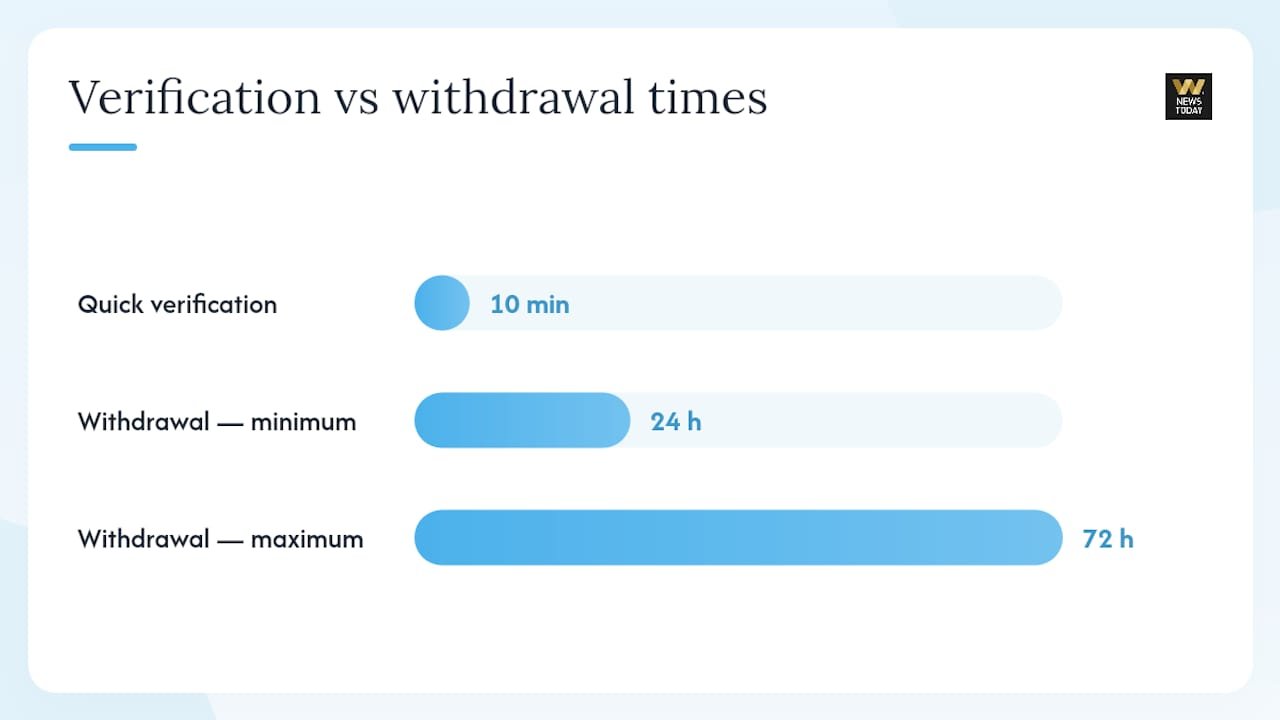
Step 6: Run a small deposit and withdrawal test. Deposit the minimum, play a few spins, and request a withdrawal of your remaining balance. A trustworthy operator processes small withdrawals within 24–72 hours. Delays, new verification requests, or outright refusals on a small amount are a serious warning sign. Using the right payment method for this test also matters: a credit card gives you chargeback rights if the withdrawal is refused.
Pro Tip: Cross-check claimed licenses and test-lab certifications directly against regulator and test-house public records. Scammers routinely display fake seals or link to non-existent regulator pages. The only verification that counts is the one you do yourself on the official source.
| Checklist Step | Concrete Evidence to Find |
|---|---|
| Verify state license | License number matches regulator’s public database entry |
| Confirm test-lab certificate | Clickable seal opens lab’s domain; report ID is searchable |
| Check in-game RTP | RTP percentage visible in game info panel or provider’s site |
| Confirm game provider | Provider’s certification status verifiable on lab or provider site |
| Scan complaint history | No active enforcement actions; no pattern of withdrawal refusals |
| Small withdrawal test | Withdrawal processed within 24–72 hours with no new barriers |
What should you do if you suspect a slot is rigged?
Suspicion alone is not enough. You need documentation, and you need to escalate through the right channels. Here is the procedural playbook.
- Contact the operator in writing — Submit a formal complaint through the casino’s support system, not just live chat. Request a written response. Set a deadline (typically 48–72 hours) and document the timestamp of your complaint.
Practical tips for safer play and responsible gambling
No strategy overcomes the house edge, and no guaranteed trick exists to beat online slots consistently. What you can control is how you play, where you play, and how much you risk. These habits protect your bankroll and your experience.
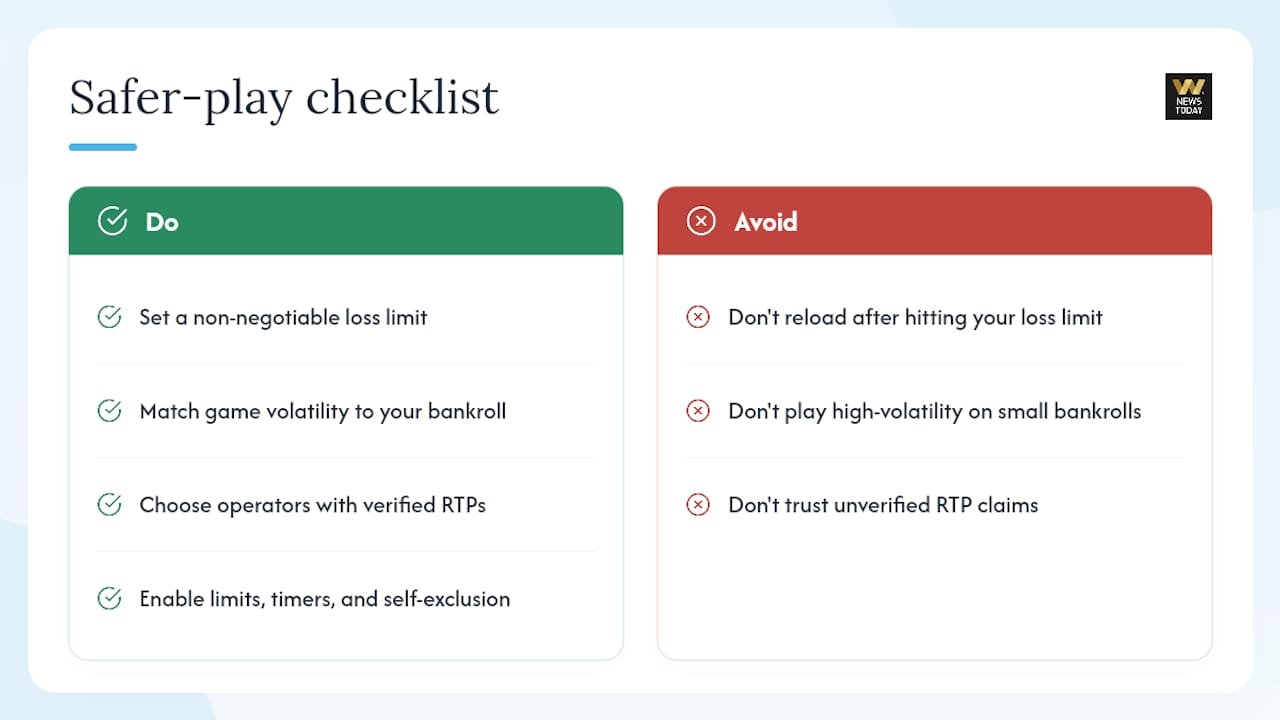
Set a hard loss limit before every session and treat it as non-negotiable. If you deposit $100, decide in advance that losing $100 ends the session. No reloads. Volatility selection matters here: high-volatility titles can drain a $100 bankroll in 30 spins. Match the game’s volatility to your budget.
Choose slots at operators with clearly published RTPs and audited games. A game with a verified 96% RTP at a licensed casino is a better bet than an unverified 98% claim at an offshore site. The number means nothing without the certification behind it.
Use every responsible-gambling tool the operator provides. Deposit limits, session time reminders, and self-exclusion programs exist because regulators require them. Setting a weekly deposit limit takes 60 seconds and prevents the kind of session escalation that turns a bad night into a serious problem. The W88news responsible gambling page covers these tools in detail and links to support resources.
If gambling stops feeling like entertainment and starts feeling like a solution to something else, reach out to the National Council on Problem Gambling (NCPG) at ncpgambling.org or call their helpline at 1-800-522-4700. The NCPG is the leading U.S. advocacy organization for problem gambling awareness and connects players with state-level treatment resources.
Pro Tip: Before any high-stakes session, run the six-step verification checklist from the previous section. A five-minute check on license status and test-lab certificates is the single highest-value action you can take to protect your play.
Why do players still believe slots are rigged, even at licensed casinos?
The perception gap between “this feels rigged” and “this is rigged” is almost entirely explained by math and cognitive bias, not evidence of manipulation.
RTP and variance create genuinely painful short-term outcomes. A certified 96% RTP slot can return 40% over a 100-spin session without any manipulation. That is a $60 loss on a $100 bankroll, and it is statistically unremarkable. The problem is that most players do not experience slots as a long-run statistical exercise. They experience a session, and a bad session feels personal.
Two cognitive biases amplify this. The gambler’s fallacy convinces players that past losses make future wins more likely, so when the win does not arrive, the game must be cheating. Loss attribution bias leads people to credit wins to skill or luck and attribute losses to external causes, including a rigged system. Neither bias reflects the actual mechanics.
What certification actually proves is specific and bounded. Testing labs verify that the RNG output is statistically random, that the game math model produces the certified RTP over large sample sizes, and that the mapping between RNG output and reel symbols is correct. Certification does not guarantee you will win in any given session. It guarantees the game is not cheating. Those are different things, and conflating them is the root of most “rigged” narratives.
The verifiable proof points that resolve doubt are the same ones covered in the checklist: a searchable state license, a clickable test-lab seal with a real report ID, and an in-game RTP figure that matches the certified range. If all three check out, the game is fair. Your session outcome is just variance.
Key Takeaways
Licensed online slots are not rigged: certified RNGs, published RTPs, and state regulatory oversight make deliberate manipulation both technically difficult and commercially irrational for licensed operators.
| Point | Details |
|---|---|
| Licensing is the primary check | Verify the operator’s license number directly on the state regulator’s database before depositing. |
| Test-lab certificates are verifiable | Click every seal and confirm the report ID on the lab’s own website (GLI, eCOGRA, iTech Labs, BMM, NMi). |
| RTP is a long-run average | Most regulated slots carry RTPs of 94%–97%; short-term losses are variance, not manipulation. |
| Unlicensed sites carry the real risk | Offshore operators have no mandatory independent testing and documented cases of manipulated payout rates. |
| Responsible gambling tools are required | Licensed U.S. operators must offer deposit limits, self-exclusion, and a formal complaint process. |
The part most fairness guides skip
There is a version of this conversation that stops at “licensed slots are fair, trust the RNG” and calls it done. That framing is technically accurate and practically incomplete.
The real issue is not whether the RNG is certified. It is whether you are playing at an operator where the certified version of the game is actually running. A licensed operator can, in theory, run a certified game in one jurisdiction and a different build in another. Version control requirements exist precisely to prevent this, but enforcement quality varies by state. New Jersey’s DGE is genuinely rigorous. Some smaller state frameworks are newer and still building their audit infrastructure.
The other thing worth saying plainly: the house edge is not a minor footnote. At 96% RTP, the casino takes 4 cents of every dollar wagered, forever, across every player. That is a structural, mathematical certainty. No hot streak changes it. No betting system overcomes it. The players who enjoy slots long-term are the ones who treat that edge as the price of entertainment, set a budget accordingly, and walk away when the budget is spent.
The checklist in this article is not just a fairness exercise. It is the habit that separates players who stay in control from players who get burned by an operator they should never have trusted. Run it every time you try a new casino. It takes ten minutes. The alternative can cost a lot more than that.
Useful sources for verifying licenses, labs, and getting help
Use these directly. Do not rely on a casino’s own links to these pages.
- Are Online Casinos Rigged? Separating Myth From Reality
- Are Online Slots Fair? 6 Powerful Proofs Revealed
- Are Slot Machines Random? The Truth About RNG in Slots (2026)
- Are Online Slots Rigged? The Truth About How They Actually Work
- Are Slot Machines Rigged? Guide to Why Online Slots are NOT fixed!
Cross-check every license number and every seal ID against these sources directly. A seal you cannot verify on the issuing organization’s own domain is not a trust signal.
This article is general information about online slot fairness and regulation, not legal or financial advice. Gambling laws and licensing requirements vary by state. Confirm current rules with your state’s gaming regulator or a qualified professional before playing.
FAQ
Are online slot machines at licensed casinos rigged?
No. Licensed online slots use certified RNGs verified by independent labs like GLI, eCOGRA, and iTech Labs, and are governed by state regulators including the New Jersey DGE and Pennsylvania Gaming Control Board. The house edge is disclosed and certified, not a hidden manipulation.
What are the signs of a rigged slot machine or casino?
Key red flags include fake or non-clickable test-lab seals, license numbers that do not appear in the state regulator’s public database, missing in-game RTP figures, and withdrawal delays or refusals on small amounts. Offshore or unlicensed operators carry the highest risk of genuinely manipulated games.
Is there a trick to winning at online slots?
No guaranteed trick exists to overcome the house edge. Effective strategy focuses on bankroll management, choosing volatility that matches your budget, and playing at licensed operators with verified RTPs. Any system claiming to beat the RNG consistently is not credible.
What is the $20 method at a casino?
The $20 method refers to a popular player habit of testing a slot with a small fixed amount (often $20) to gauge its behavior before committing more. It is not a winning strategy, but it functions as a low-risk session test. It works best as a volatility check, not a payout predictor.
How do I check if an online casino is legitimate?
Search the operator’s license number on the relevant state regulator’s database (NJ DGE, PGCB, MGCB, or NGCB), click every test-lab seal to confirm the certificate ID on the lab’s own website, and verify the in-game RTP in the slot’s info panel. A small deposit and withdrawal test before high-stakes play is also a reliable practical check.