




If you’re scanning this page because something feels off about your gambling or someone you care about, here are the signs that matter most right now:
- Spending more money than you planned, repeatedly
- Borrowing cash or selling belongings to fund gambling
- Chasing losses by placing bigger bets after losing
- Lying to family or friends about how much you gamble
- Feeling restless, irritable, or anxious when you try to stop
- Gambling to escape stress, depression, or bad news
- Missing work, school, or family events because of gambling
- Thinking about gambling constantly, even when doing other things
Key Takeaways
Gambling disorder is a recognized DSM-5 condition, and spotting four or more warning signs within 12 months is a clear signal to seek a professional evaluation.
| Point | Details |
|---|---|
| Top signs to watch | Chasing losses, lying about gambling, borrowing money, and failed attempts to stop are the highest-risk indicators. |
| Clinical threshold | Four or more DSM-5 criteria within 12 months warrants a professional evaluation, not just self-monitoring. |
| Severe risks are real | The Louisiana Department of Health links problem gambling to financial ruin, relationship breakdown, and elevated suicide risk. |
| Treatment works | CBT, peer support groups, and self-exclusion tools are evidence-based options; recovery rarely relies on willpower alone. |
| First step right now | Call the NCPG helpline at 1-800-522-4700 (24/7) or use a free state self-assessment tool to gauge your risk level. |
Table of Contents
- What gambling disorder actually means
- The most common problem gambling signs, with real examples
- How to do a quick self-assessment using clinical criteria
- Who is at higher risk and what often comes with it
- When to get help and what treatment looks like
- How to talk with someone you think has a gambling problem
- Practical harm-reduction steps you can take today
- Recognizing the signs is already the hardest part
- Sources
- FAQ
What gambling disorder actually means
Gambling disorder is the clinical term for what most people call problem gambling. The American Psychiatric Association recognizes it in the DSM-5 as a behavioral addiction: a pattern of repeated betting that continues despite causing real harm across finances, relationships, work, and mental health.
“Gambling disorder is characterized by persistent and recurrent problematic gambling behavior leading to clinically significant impairment or distress.” — American Psychiatric Association
This isn’t just about losing money. The core issue is loss of control. A person with gambling disorder often wants to stop, tries to stop, and can’t. Mayo Clinic frames it as an impulse-control problem with addiction-like features, not a character flaw or a lack of willpower.
The most common problem gambling signs, with real examples
These signs span five categories: financial, behavioral, interpersonal, legal, and emotional. Recognizing which category a pattern falls into helps you see the full picture faster.
Financial signs
- Spending beyond your intended budget, every session
- Borrowing money from friends, family, or payday lenders to gamble
- Unpaid bills, overdrafts, or maxed-out credit cards tied to gambling losses
- Selling personal items to get gambling funds
Behavioral signs
- Chasing losses: placing bigger bets after losing to “win it back” (this cycle is driven by addiction-related reward processing, not just bad strategy)
- Gambling sessions that run far longer than planned
- Hiding betting apps, browser history, or bank statements
- Needing to bet larger amounts to feel the same excitement
Interpersonal signs
- Lying to a partner, parent, or employer about gambling activity
- Missing birthdays, dinners, or work deadlines because of gambling
- Withdrawing from friends who don’t gamble
Legal and financial-crisis signs
- Stealing money or committing fraud to fund gambling
- Facing debt-collection calls or legal action tied to gambling losses
Emotional signs
- Gambling to escape anxiety, depression, or loneliness
- Feeling guilty, ashamed, or hopeless after sessions
- Thoughts of self-harm or suicide connected to gambling losses
According to state problem-gambling centers, the most commonly reported early signs are spending more than intended and chasing losses — two behaviors that often appear before the person recognizes a problem themselves.
Pro Tip: Denial is one of the most consistent features of gambling disorder. Mayo Clinic notes that family members and close friends usually spot financial and behavioral discrepancies before the individual admits anything is wrong. If someone you care about is showing these signs, your concern is valid data.
How to do a quick self-assessment using clinical criteria
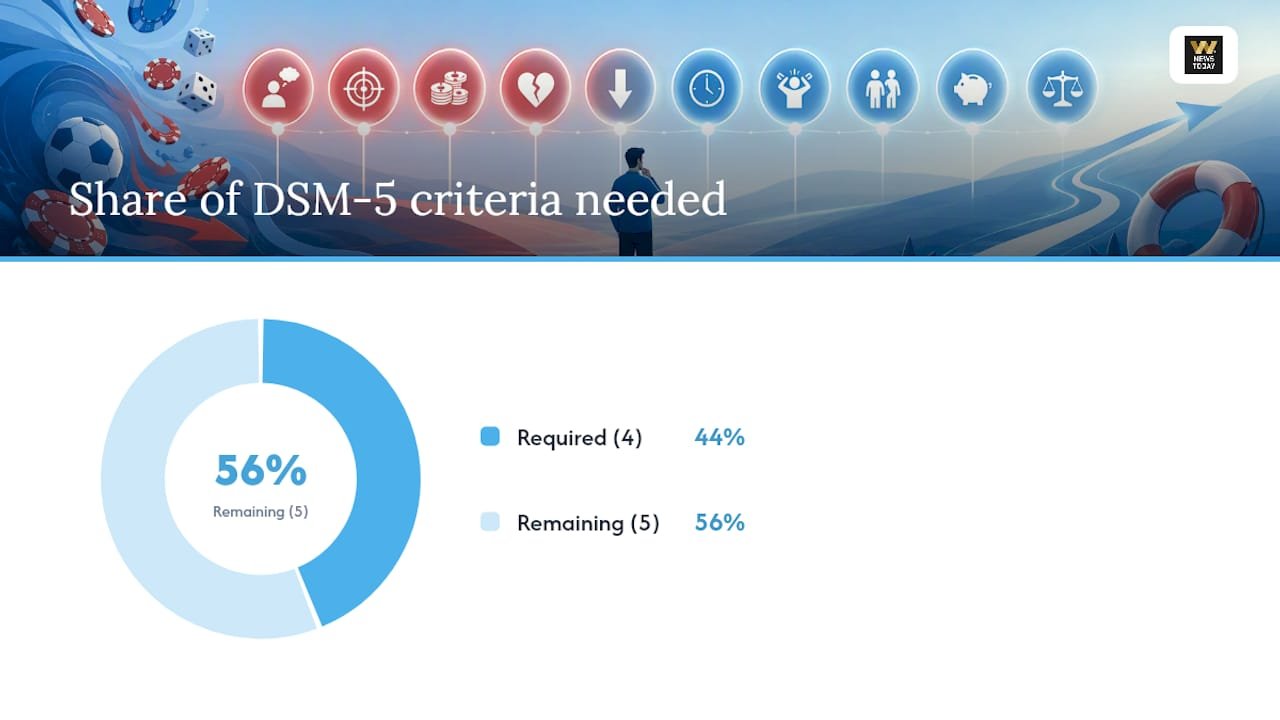
The DSM-5 identifies nine diagnostic features for gambling disorder. Clinicians look for four or more of these within a 12-month period to confirm a diagnosis. You can use this list as a personal checkpoint right now.
- Preoccupation: Do you spend a lot of time thinking about gambling, past wins, or planning your next session?
- Tolerance: Do you need to bet larger amounts to get the same level of excitement?
- Failed control: Have you tried to cut back or stop gambling and failed?
- Withdrawal: Do you feel restless or irritable when you try to reduce or quit?
- Escape: Do you gamble to cope with stress, anxiety, depression, or boredom?
- Chasing: After losing, do you return to try to win back your money?
- Lying: Have you hidden the extent of your gambling from anyone close to you?
- Jeopardized relationships or opportunities: Has gambling cost you a job, a relationship, or an academic opportunity?
- Financial dependence: Have you asked others for money to cover gambling debts or living expenses caused by gambling?
If you answered yes to four or more, a clinical evaluation is strongly recommended. The Pennsylvania Gaming Control Board and the Massachusetts state guidance both offer free online self-assessment tools that use similar question sets.
Who is at higher risk and what often comes with it
Gambling disorder doesn’t develop in a vacuum. Certain factors raise the likelihood that recreational gambling escalates into something harder to control.
Risk factors include:
- Younger age at first gambling exposure
- Male gender (though rates among women are rising, particularly with online gambling)
- Personal or family history of substance use or other addictions
- History of trauma, abuse, or adverse childhood experiences
- Socioeconomic stress or financial instability
- Easy access to gambling through mobile apps, online casinos, or nearby venues
- Competitive or sensation-seeking personality traits
Common co-occurring conditions:
- Depression and anxiety disorders
- Alcohol or substance use disorders
- Attention-deficit/hyperactivity disorder (ADHD)
- Suicidal ideation or attempts
The Louisiana Department of Health highlights that problem gambling can lead to severe outcomes including financial ruin, relationship breakdown, and elevated suicide risk, making early recognition and referral critical.
The overlap with depression and substance use is especially important. Treating gambling disorder in isolation, without addressing co-occurring mental health conditions, tends to produce weaker outcomes. A thorough clinical evaluation screens for all of these.
When to get help and what treatment looks like
Some people wait for a “rock bottom” moment before seeking help. You don’t have to. These are clear triggers that mean it’s time to act now:
- You’ve lost a job, a relationship, or housing because of gambling
- You’re relying on others to cover bills or debts caused by gambling
- You’ve had thoughts of self-harm or suicide related to gambling losses
- You’ve tried to stop multiple times and can’t stay stopped
- You’re hiding financial records or lying regularly to people you trust
Where to get help in the U.S.:
- National Council on Problem Gambling (NCPG) Helpline: 1-800-522-4700, available 24/7 for calls, texts, and chat at Ncpgambling
- State problem-gambling resource centers: Most states run dedicated programs with free counseling referrals; Arizona’s center is one example of what these offer
- Crisis lines: If there are immediate safety concerns, call or text 988 (Suicide and Crisis Lifeline)
“Treatment for gambling disorder often includes cognitive behavioral therapy, support groups, and structured habit change with relapse planning.” — Cleveland Clinic
Evidence-based treatment options:
- Cognitive Behavioral Therapy (CBT): Targets the thought patterns that drive chasing losses and denial
- Motivational Interviewing: Helps people who are ambivalent about stopping build their own reasons to change
- Gamblers Anonymous: Peer support using a 12-step model, with meetings in most U.S. cities
- Medication: Some psychiatrists use antidepressants or opioid antagonists for co-occurring conditions; no medication is FDA-approved specifically for gambling disorder, but clinical management helps many people
- Self-exclusion programs: Formal bans from casinos or online platforms that create a structural barrier
Recovery is usually gradual. Most people benefit from a combination of therapy, peer support, and access barriers rather than relying on willpower alone.
How to talk with someone you think has a gambling problem
Approaching someone about their gambling is hard. These tactics make the conversation more likely to land.
Starting the conversation:
- Choose a calm, private moment when neither of you is stressed or rushed
- Use specific examples: “I noticed you borrowed $300 last week and you’ve been online late every night” rather than “You gamble too much”
- Avoid shaming or ultimatums in the opening; lead with concern
- Listen more than you talk; invite them to share what’s going on
Setting financial boundaries:
- Stop covering gambling debts directly; this removes a consequence that often motivates change
- Offer structured help instead: paying a bill directly rather than handing over cash
- Consider a joint account review with a financial counselor if finances are shared
Pro Tip: Clinicians recommend acting on patterns, not single events. One late night is not a crisis. A month of missed bills, hidden statements, and mood swings is a pattern worth naming directly.
If there’s a crisis:
- If someone expresses suicidal thoughts connected to gambling losses, call 988 or take them to an emergency room immediately
- If there’s immediate financial fraud or legal danger, contact a legal aid service in your state
Practical harm-reduction steps you can take today
You don’t need to wait for a formal diagnosis to start reducing harm. These steps work whether you’re concerned about yourself or someone else.
- Set deposit and time limits on every gambling platform you use; most licensed U.S. operators are required to offer these tools
- Enroll in a self-exclusion program through your state gaming control board or the casino directly; this creates a legal barrier to entry
- Remove saved payment methods from gambling apps and websites so every session requires a deliberate financial decision
- Block gambling sites using tools like Gamban or your device’s parental controls
- Tell a trusted person your spending limit and ask them to check in weekly
- Replace high-risk habits with structured alternatives: a gym class, a hobby group, or a regular social commitment that fills the same time slot
- Avoid high-risk settings like casinos, sports bars with heavy betting culture, or social groups where gambling is the main activity
- Check your operator’s safety tools; W88news covers responsible gambling resources and guidance on using platform safety features effectively
- Avoid unregulated sites that lack safety tools; blacklisted and risky operators often have no deposit limits or self-exclusion options
The Cleveland Clinic notes that external access barriers like self-exclusion are among the most practical, evidence-informed steps a person can take before or alongside formal treatment.
Recognizing the signs is already the hardest part
Spotting a gambling problem in yourself or someone you love takes courage. The pattern is designed to stay hidden: the secrecy, the rationalizations, the “I’ll stop after this win” thinking. What the research consistently shows is that early recognition improves outcomes. You don’t need to hit a financial or personal crisis to deserve help.
If several signs from this article apply, don’t wait for things to get worse. Use the NCPG helpline, run through a state self-assessment tool, or book a session with a licensed counselor. The clinical framing matters here: gambling disorder is a recognized mental health condition, not a moral failure. Treating it that way opens up real options.
Sources
- What is Gambling Disorder? – American Psychiatric Association
- Compulsive gambling – Symptoms & causes – Mayo Clinic
- Signs & Symptoms – Problem Gambling
- Do I Have a Gambling Problem – Pennsylvania Gaming Control Board
- When Gambling is a Problem | Louisiana Department of Health
To find your state’s helpline, search “[your state] problem gambling helpline” or call the NCPG national line for a local referral.
This article is general information, not a substitute for advice from a qualified doctor. Consult a qualified healthcare professional about your own circumstances before acting on anything here.
FAQ
What are the 7 warning signs of problem gambling?
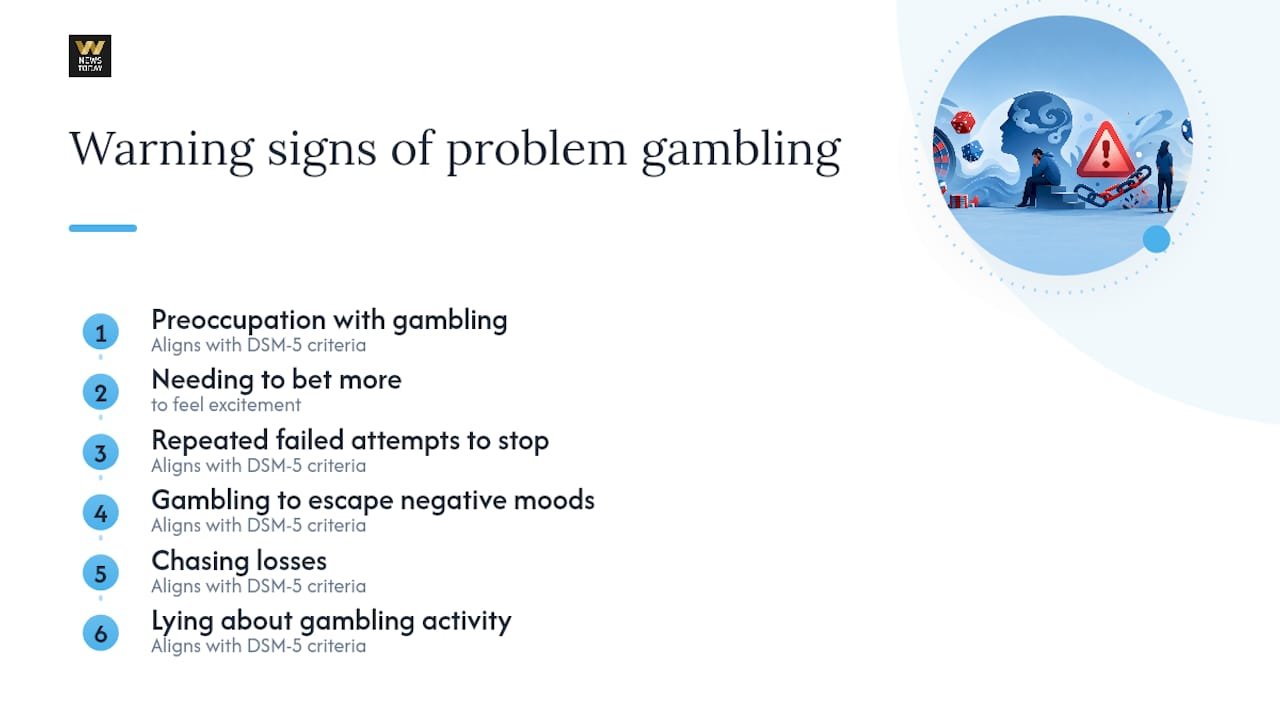
The most cited signs are: preoccupation with gambling, needing to bet more to feel excitement, repeated failed attempts to stop, gambling to escape negative moods, chasing losses, lying about gambling activity, and jeopardizing a job or relationship. These align directly with DSM-5 criteria for gambling disorder.
How do I know if gambling is a problem for me?
If you answer yes to four or more DSM-5 screening questions (such as chasing losses, hiding gambling, or relying on others for money), a clinical evaluation is recommended. Free self-assessment tools are available through state gaming control boards like the Pennsylvania Gaming Control Board.
What are the stages of a problem gambler?
Clinicians generally describe a progression from a winning phase (excitement, early wins) to a losing phase (chasing losses, borrowing money) to a desperation phase (financial crisis, legal trouble, emotional breakdown). Not everyone follows this exact path, but escalation over time is a consistent pattern.
When should someone stop gambling and seek help?
Seek help when gambling causes repeated financial harm, relationship damage, failed attempts to stop, or thoughts of self-harm. You don’t need to reach a crisis point; early intervention consistently produces better outcomes than waiting.